

How Long Can Someone Live With Late-Stage Dementia?
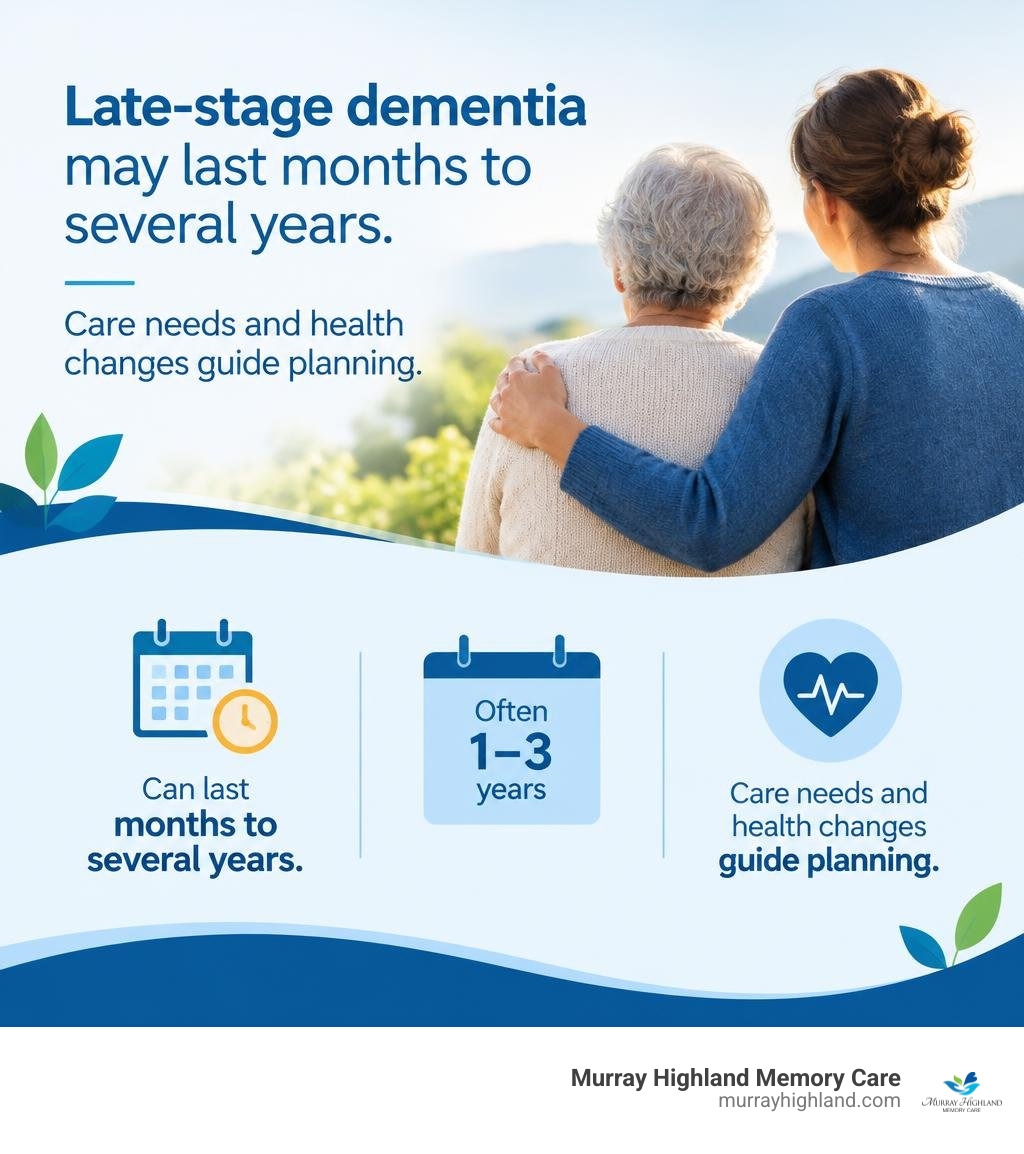
Late-stage dementia can last months to several years. The final stage often lasts about one to three years, but no one can predict an exact timeline. A person’s overall health, ability to swallow, and risk of infections can make a big difference.
This stage usually brings a need for full-time help with eating, moving, and personal care. If your parent is becoming bed-bound, eating much less, or having repeated infections, ask their care team what these changes mean and whether palliative or hospice care could help. You do not need to wait for the final days to ask about comfort and support.
Late Stage Dementia: How Long to Live and What to Expect
When families ask about late stage dementia how long to live, they are often searching for clarity during an emotionally exhausting chapter. Across the broader trajectory of neurodegenerative illness, people live anywhere from 2 to 20 years following an initial diagnosis, with overall averages landing between 3 and 11 years. However, once the illness reaches its advanced or end stage, the timeline narrows significantly.
Clinical frameworks like the Global Deterioration Scale (GDS) and the Functional Assessment Staging Tool (FAST) measure this progression by tracking the loss of functional abilities. In the late stage, the brain’s control over basic bodily mechanisms begins to fail. As highlighted by BrightFocus Foundation research on dementia life expectancy, a diagnosis of dementia reduces life expectancy by approximately nine years on average compared to the general population. Knowing what lies ahead helps families shift their focus from crisis management to intentional, compassionate comfort care.
The 7 Stages of Progression and Reaching Stage 7 (End-Stage)
Dementia does not change overnight; it moves along a spectrum often categorized into seven distinct clinical stages. As outlined in the Johns Hopkins Medicine clinical stages of Alzheimer’s, these phases span from no cognitive impairment (Stage 1) to severe, late-stage decline (Stage 7).
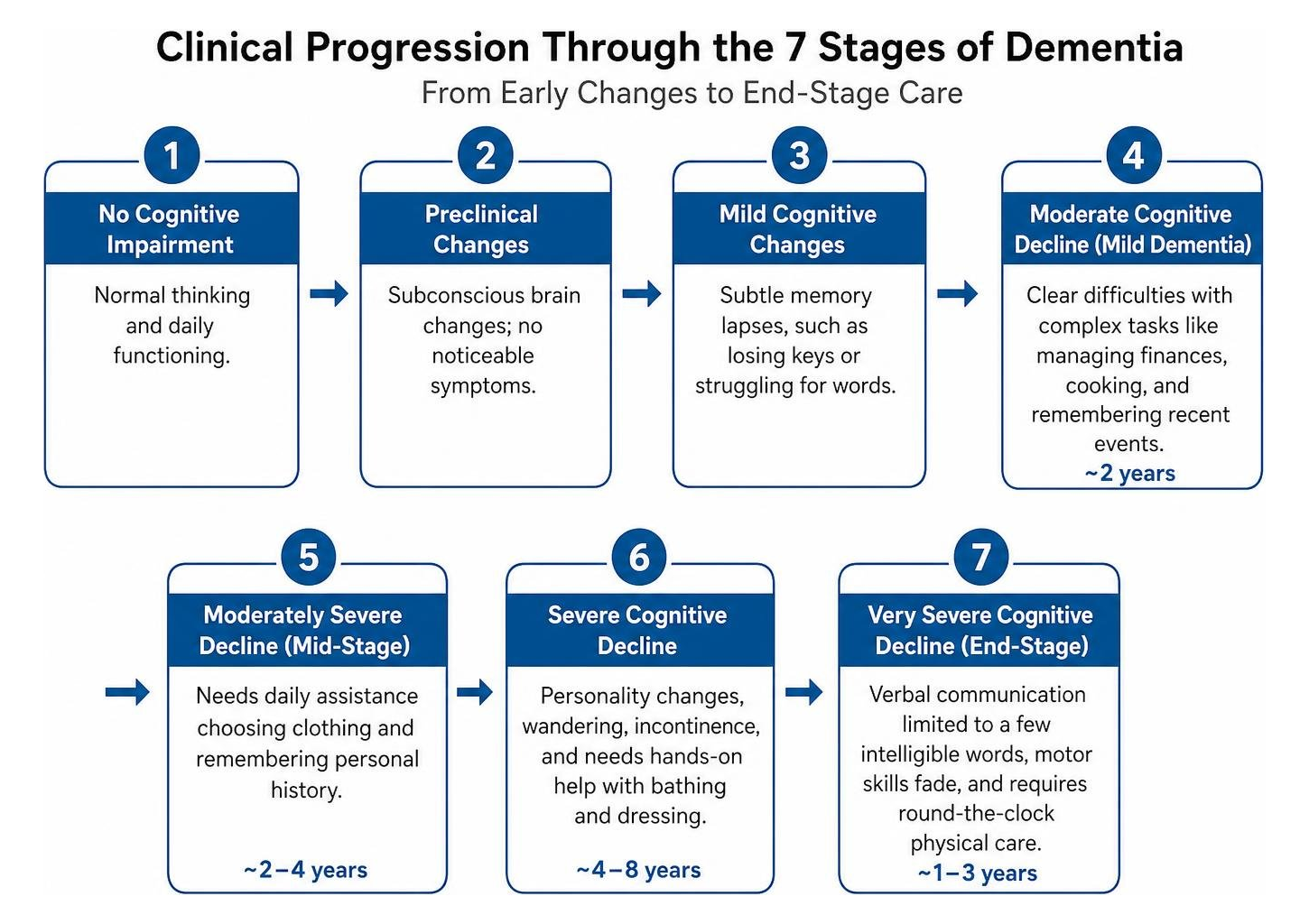
- Stages 1–3 (Preclinical to Mild Decline): Subconscious changes evolve into subtle memory lapses, such as losing keys or struggling for words, typically lasting several years.
- Stage 4 (Moderate Cognitive Decline / Mild Dementia): Clear difficulties emerge with complex tasks like managing finances, cooking, and remembering recent events (typically lasting around 2 years).
- Stage 5 (Moderately Severe Decline / Mid-Stage): Individuals require daily assistance choosing clothing and remembering personal history, lasting roughly 2 to 4 years.
- Stage 6 (Severe Cognitive Decline): Often the longest phase (lasting 4 to 8 years), marked by personality changes, wandering, incontinence, and the need for hands-on help with bathing and dressing.
- Stage 7 (Very Severe Cognitive Decline / End-Stage): The final stage, which typically spans 1 to 3 years. Verbal communication drops to a few intelligible words, motor skills fade, and individuals require round-the-clock physical care.
Understanding how these phases unfold is essential for families understanding Alzheimer’s progression as daily care needs steadily climb.
Understanding Late Stage Dementia: How Long to Live Across Different Diagnoses
Life expectancy in the final stage varies depending on the specific underlying pathology of the brain. While Alzheimer’s disease represents 60 to 80 percent of all dementia cases, other conditions carry different progressions and physical impacts.
| Dementia Type | Typical Post-Diagnosis Survival | Late-Stage (Stage 7) Duration | Primary End-Stage Complications |
|---|---|---|---|
| Alzheimer’s Disease | 4–8 years (up to 20 years) | 1–3 years | Aspiration pneumonia, loss of mobility, sepsis |
| Vascular Dementia | 3–5 years | Months to 2 years | Stepwise stroke events, cardiovascular collapse |
| Lewy Body Dementia (LBD) | 5–8 years | 1–2 years | Severe falls, autonomic dysfunction, dysphagia |
| Frontotemporal Dementia (FTD) | 6–13 years | 1–2 years | Motor neuron complications, swallowing failure |
Exploring the unique trajectories of different types of dementia can help caregivers understand why someone with vascular dementia might experience sudden drops in function, whereas Alzheimer’s typically involves a slow, steady decline.
Factors That Determine in Late Stage Dementia How Long to Live
No two individuals travel this road at the exact same pace. Several biological and clinical variables influence how long someone remains in Stage 7:
- Age at Diagnosis: An individual diagnosed between ages 70 and 79 can expect to live around seven additional years, whereas someone diagnosed after age 90 has an expected survival of roughly 2.8 years.
- Biological Sex: On average, women with dementia live approximately 1.5 years longer than men, partly due to broader biological longevity patterns.
- Comorbid Health Conditions: Co-existing chronic conditions—such as congestive heart failure, diabetes, or kidney disease—accelerate physical frailty and shorten the final stage.
- Episodes of Delirium: Acute confusional states triggered by underlying infections or medication side effects (which cause up to 39% of delirium cases) can permanently lower baseline function.
- Nutritional and Swallowing Status: The onset of severe dysphagia (difficulty swallowing) dramatically increases the risk of dehydration, weight loss, and respiratory complications.
Physical Signs of the Final Stage and Common Causes of Death

As the disease enters its terminal phase, physiological decline becomes noticeable across every bodily system. The brain gradually loses its ability to coordinate voluntary and involuntary actions, from chewing food to regulating internal temperature.
Recognizing When a Person Is Nearing the End of Life
Recognizing clinical signs of transition allows families to shift from routine care to specialized comfort measures. Common indicators that the end of life is approaching include:
- Severe Dysphagia: Frequent coughing, choking, or pocketing food in the cheeks when eating.
- Loss of Verbal Expression: Speech becomes limited to single words, short phrases, or soft vocalizations.
- Complete Immobility: Becoming completely bed-bound or chair-bound, losing the ability to sit up without support.
- Changes in Consciousness: Sleeping for most of the day and night, with brief, non-responsive waking periods.
- Altered Breathing Patterns: Cheyne-Stokes respiration (irregular cycles of rapid, deep breaths followed by long pauses or apnea).
- Peripheral Cooling and Mottling: Hands, feet, and knees feel cold to the touch and develop a purplish, lace-like discoloration as blood circulation slows.
Primary Complications Leading to Death in Advanced Dementia
Dementia is classified as a terminal condition, but individuals rarely pass away from neurological decline alone. Instead, secondary medical complications typically lead to death:
- Aspiration Pneumonia: When swallowing reflexes fail, food, saliva, or liquids enter the lungs rather than the stomach, causing serious pulmonary infections.
- Urosepsis: Advanced incontinence and decreased hygiene awareness increase susceptibility to urinary tract infections (UTIs), which can rapidly enter the bloodstream.
- Severe Pressure Ulcers: Extended immobility places intense pressure on vulnerable skin areas, creating deep wounds prone to systemic bacterial infection.
- Pulmonary Embolism: Prolonged bed rest raises the risk of deep vein thrombosis (blood clots in the legs) that can travel to the lungs.
- Dehydration and Malnutrition: In the final weeks, the body naturally stops processing nutrients and fluids as the digestive system shuts down.
End-of-Life Care: Comparing Palliative Care, Hospice, and Memory Care
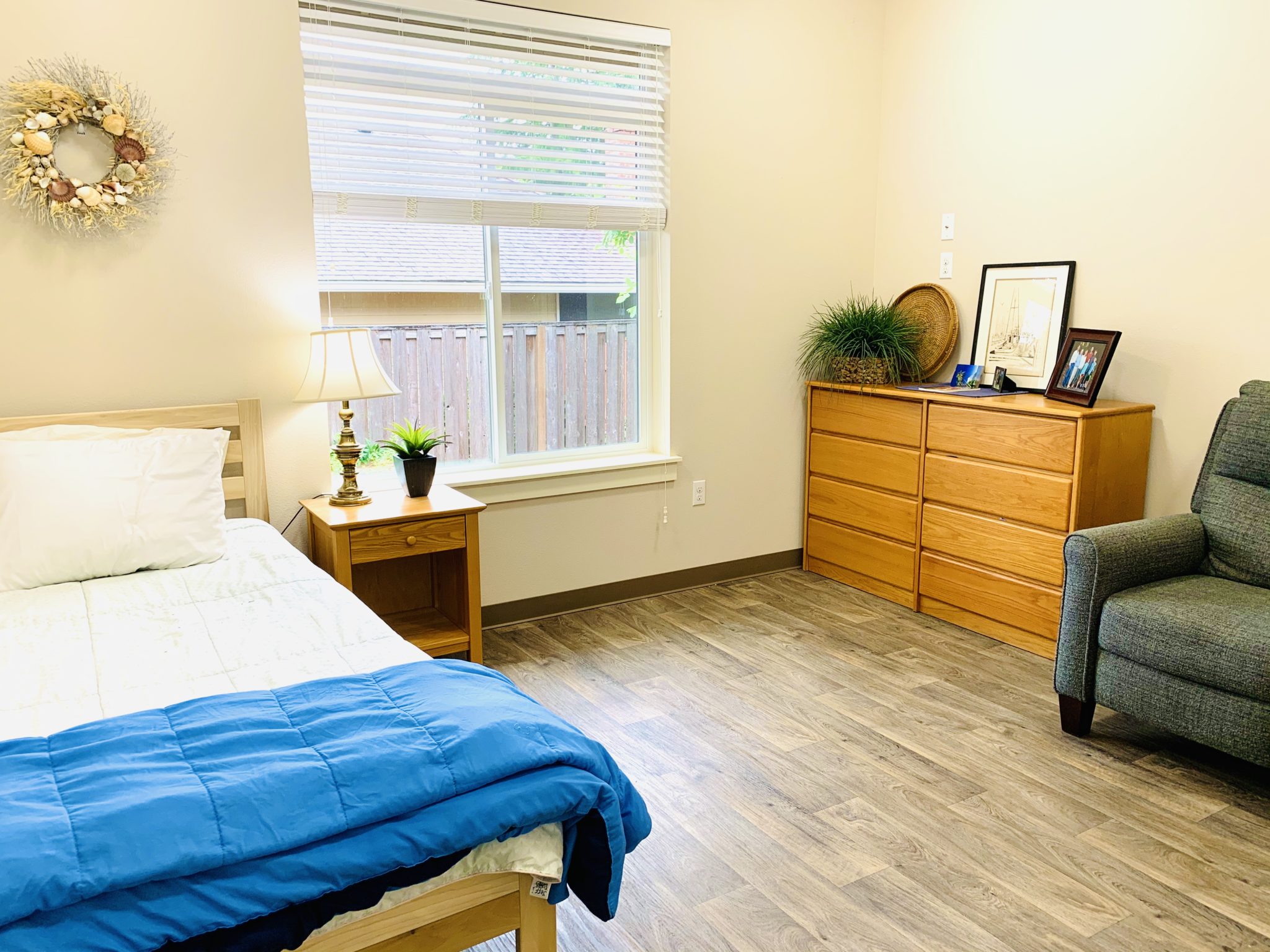
Managing late-stage dementia requires an environment dedicated to dignity, safety, and around-the-clock symptom relief. Families often evaluate different care models to determine the right setting for their loved one’s needs, particularly when weighing the differences between memory care and dementia care.
Hospice Eligibility and the FAST Scale Criteria
Hospice care is designed for the terminal phase of an illness, focusing entirely on comfort rather than curative treatment. To qualify for Medicare-covered hospice care with a primary diagnosis of dementia, a physician must certify that life expectancy is six months or less under normal disease progression.
Clinically, this requires reaching FAST Stage 7a or greater, characterized by:
- Inability to speak more than a half-dozen intelligible words per day (7a) or a single word (7b).
- Loss of ambulatory ability without assistance (7c).
- Inability to sit up independently (7d), smile (7e), or hold up the head (7f).
- A documented history of secondary complications within the past 12 months, such as aspiration pneumonia, recurrent pyelonephritis, severe pressure ulcers, or unmanageable weight loss.
Despite these established guidelines, The New York Times analysis on advanced dementia end-of-life care reveals that fewer than one in ten people dying of dementia receives hospice services. Only about 11% of hospice patients have dementia as their primary diagnosis, largely because predicting a strict six-month timeline for dementia is challenging for clinicians.
Palliative Care vs. Hospice: Aligning Comfort and Goals
Many families confuse palliative care with hospice, but they serve different roles along the healthcare continuum:
| Care Dimension | Palliative Care | Hospice Care |
|---|---|---|
| Timing & Eligibility | Any stage of a serious illness; no timeline limit | Terminal phase; certified prognosis of 6 months or less |
| Treatment Focus | Symptom relief alongside disease treatments | Pure comfort care; curative interventions cease |
| Care Location | Clinics, hospitals, residential memory care, home | Residential memory care, home, hospice facilities |
| Payment Structure | Covered via Medicare Part B / private insurance | Covered under Medicare Part A Hospice Benefit (100%) |
Recognizing the signs a loved one needs specialized memory care allows families to explore whether their family member meets the criteria for who qualifies for residential memory care, providing structured physical support while palliative or hospice teams handle specialized symptom management.
Comfort Care and Legal Planning for Families
The primary goal in late-stage dementia is preserving comfort and peace. When verbal communication fades, caregivers must rely on careful observation to identify distress and provide relief.
Managing Non-Verbal Distress and Physical Comfort
Because individuals in Stage 7 cannot clearly say where it hurts, our care teams monitor subtle non-verbal cues:
- Facial Expressions: Furrowed brows, grimacing, or tightly clenched eyes during movement.
- Vocalizations: Groaning, whimpering, or calling out during transfers.
- Body Posture: Guarding specific body areas, muscle tension, or restless fidgeting.
- Autonomic Signs: Unexplained sweating, rapid breathing, or elevated heart rate.
When swallowing becomes difficult, medications can be administered through transdermal skin patches, sublingual drops, or continuous subcutaneous syringe pumps. Non-pharmacological comfort techniques—such as playing familiar music, providing gentle hand massage, using specialized air mattresses, and applying frequent mouth moisturizers—offer comfort without adding physical stress.
Essential Legal and Medical Documents for End-of-Life Planning
Completing advance care planning as early as possible prevents painful, crisis-driven decisions in emergency situations:
- Medical Orders for Life-Sustaining Treatment (MOLST / POLST): Actionable medical orders signed by a physician detailing preferences for resuscitation (DNR), intubation, and hospital transfers.
- Health Care Proxy (Durable Power of Attorney for Healthcare): Designates a trusted surrogate decision-maker to speak on the individual’s behalf when capacity is lost.
- Living Will: Outlines specific wishes regarding artificial hydration, tube feeding, ventilators, and comfort-focused interventions.
- Durable Financial Power of Attorney: Empowers an agent to manage estate assets, care facility payments, and legal obligations smoothly.
Frequently Asked Questions About Late-Stage Dementia Prognosis
What is the average life expectancy after entering Stage 7 dementia?
The final stage of dementia typically lasts between 1 and 3 years. However, this window varies based on the person’s age, baseline physical strength, nutritional intake, and whether they develop secondary infections like pneumonia.
What are the signs that death is imminent within days or hours?
In the final days and hours, individuals often exhibit:
- Prolonged unconsciousness or unresponsiveness.
- Distinct Cheyne-Stokes breathing or audible respiratory congestion (often called the “death rattle”).
- Noticeable cooling and purple mottling of the hands, feet, arms, and legs.
- Minimal to no urine output, often dark in color.
- Total disinterest in fluids or food.
Why are dementia patients often under-enrolled in hospice care?
Dementia progresses gradually rather than following a steep, predictable drop, making it difficult for physicians to certify a precise six-month prognosis. Many families also assume hospice is strictly for cancer care or worry that enrolling means “giving up,” rather than viewing it as a supportive layer of expert comfort care.
Conclusion
Facing the late stages of dementia brings profound emotional challenges, but understanding what to expect transforms uncertainty into meaningful, compassionate preparation. By focusing on physical comfort, clear advance directives, and specialized support environments, families can ensure their loved ones spend their final years surrounded by gentle dignity and respect.
At Murray Highland Memory Care, our boutique, family-owned residence in Beaverton, Oregon, is designed around this exact philosophy. We provide a warm, home-like setting with personalized 24/7 care, chef-prepared meals, and a close-knit environment where residents are treated like family. If you are currently navigating the stages of Alzheimer’s and want guidance on specialized memory care or end-of-life planning, reach out to our team today to explore how we can support your family’s journey.