

Why Scheduled Respite Care Matters for Dementia Caregivers
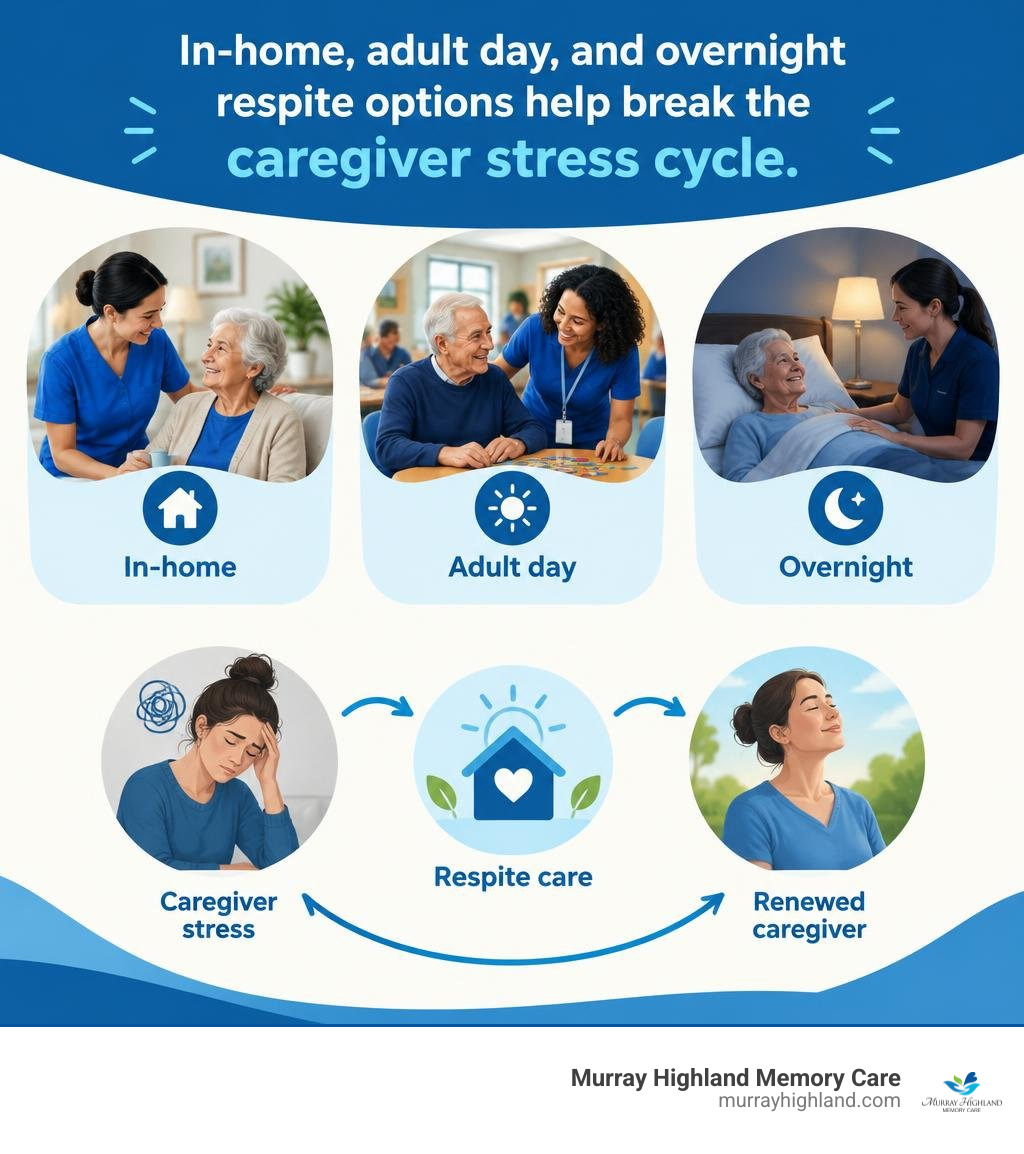
Respite care gives you a planned break while someone else cares for your parent with dementia. You can arrange care at home, at an adult day center, or through a short residential stay. Start with a few hours that fit your parent’s routine, then make breaks a regular part of the care plan.
If you’re always watching for safety risks or managing daily needs, it’s hard to rest. Scheduled respite care for dementia gives you time for your own health, work, or family while your parent receives support. Needing that time is not a failure. It’s part of making care sustainable.
Why Scheduled Respite Care Dementia Services Are Essential for Family Health
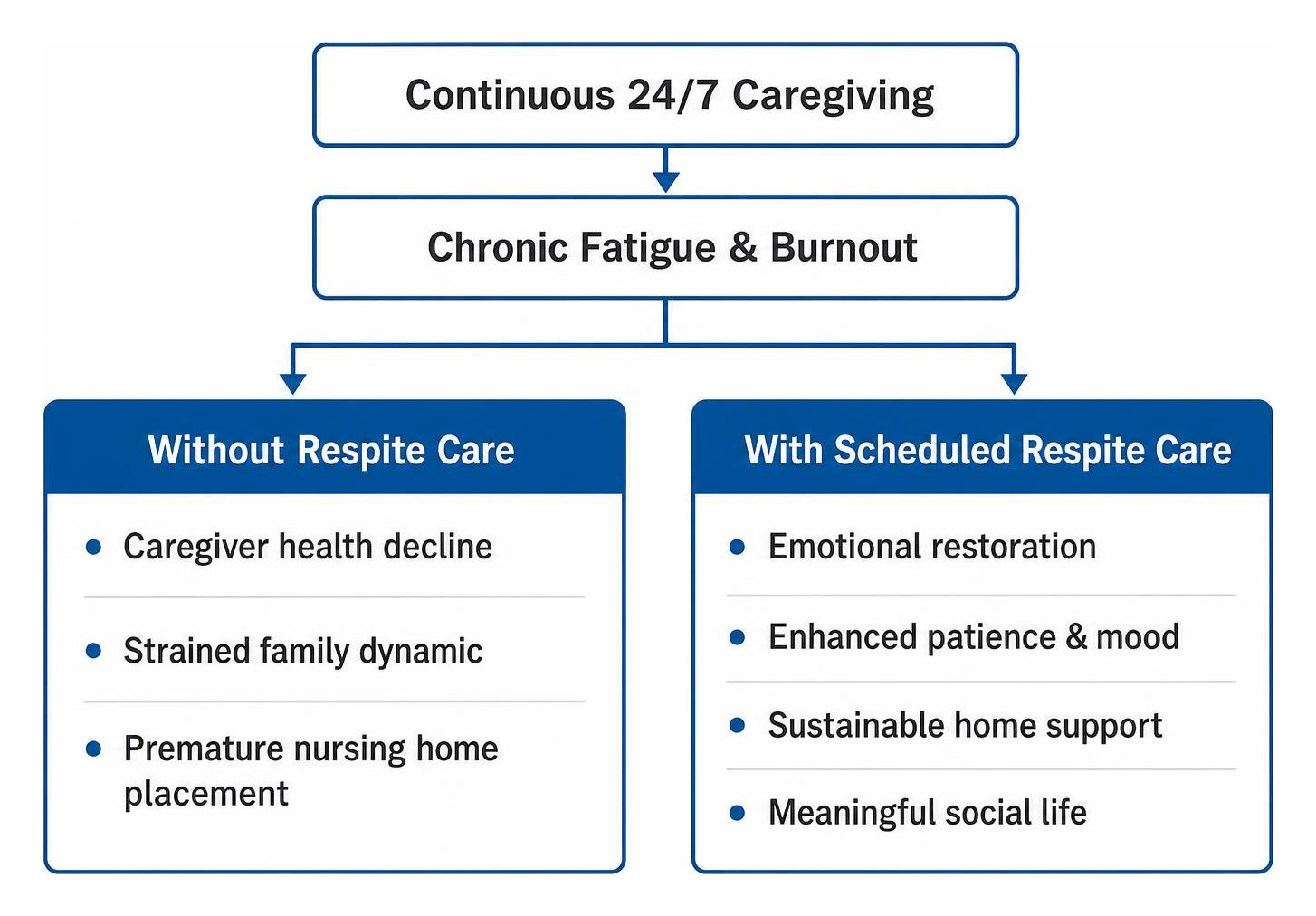
Caring for someone experiencing cognitive decline is deeply meaningful, but the daily physical and emotional demands accumulate quickly. Family caregivers often manage medication schedules, nutritional needs, mobility assistance, and shifting behavioral expressions around the clock. Over time, constant vigilance triggers chronic stress, physical exhaustion, and social isolation.
When you are navigating the role of a senior caregiver, resting is not an optional luxury—it is essential maintenance. Regularly scheduled breaks prevent physical burnout, reduce depressive symptoms, and lower circulating stress hormones. Stepping away regularly allows you to return to your loved one with renewed patience, warmth, and energy.
Scientific research shows that integrating temporary relief into your weekly rhythm benefits both the caregiver and the care recipient (Zhang et al., 2025). A comprehensive Dementia Resource Guide points out that utilizing planned respite services stabilizes the home environment and substantially delays premature long-term institutionalization.
Core Types of Respite Support: In-Home vs. Out-of-Home Settings
Respite care comes in diverse formats tailored to individual care requirements, routines, and budgets. Depending on whether your loved one thrives best in familiar surroundings or benefits from group social activities, you can select the setting that matches their current comfort level.

Because symptoms vary across different types of dementia, selecting an appropriate environment ensures your loved one receives specialized engagement rather than basic supervision.
| Respite Format | Primary Setting | Key Services Provided | Best Suited For |
|---|---|---|---|
| In-Home Care | The senior’s private residence | Personal hygiene, meal prep, companionship, light housekeeping | Individuals who experience anxiety in unfamiliar places |
| Adult Day Centers | Community center or specialized facility | Structured socialization, cognitive therapy, group meals, light exercise | Seniors who enjoy structured daytime interaction |
| Residential Stays | Memory care community or residential care home | 24/7 personal care, medication management, chef-prepared dining | Caregivers taking vacations, traveling for work, or needing extended recovery |
In-Home Respite Care for Dementia
In-home respite brings trained professionals, volunteers, or companion aides directly into the individual’s living environment. This approach preserves daily routines, allowing the person to stay surrounded by familiar furniture, family photos, and comforting spaces.
In-home providers handle a broad spectrum of daily needs, including:
- Personal Care Support: Safe assistance with bathing, dressing, grooming, and toileting.
- Homemaker Services: Meal preparation, light laundry, grocery pickup, and routine household chores.
- Companionship & Safety: Supervised engagement, reminiscing activities, walking assistance, and fall prevention.
By tailoring the hours to your schedule—whether for two hours on a Tuesday morning or an entire afternoon—in-home respite lets you attend doctor appointments, run errands, or simply rest quietly in another room.
Adult Day Centers and Community Programs
Adult day centers offer structured, supervised daytime programming outside the home. These programs give participants opportunities to socialize with peers in an environment created for safety and cognitive stimulation.
Activities at adult day centers often include:
- Music therapy, art sessions, and creative storytelling
- Gentle seated yoga, stretching, and physical mobility games
- Nutritious family-style meals and snacks
- Dedicated social engagement that reduces isolation and apathy
For working family members, adult day centers provide reliable weekday coverage while offering loved ones an engaging, dignity-affirming social outlet.
Residential and Out-of-Home Respite Care Options
When a family caregiver requires several days or weeks of continuous relief—such as for planned surgery, work travel, or an extended break—short-term residential stays provide round-the-clock safety and professional support.
During a residential respite stay, individuals stay in a fully staffed care setting with 24/7 assistance, medication management, structured daily events, and balanced meals. Understanding how memory care can help gives families peace of mind knowing that skilled teams handle evening routines, sundowning behaviors, and nighttime wakefulness in a secure setting.
Financial Assistance, Grants, and Medicare Programs for Respite
Covering care expenses is a common concern for families, but numerous public initiatives, non-profit grants, and state programs help offset or fully fund respite hours. Exploring local county programs through community resources such as Caregiver Resources and Programs | Waukesha County helps connect families to regional funding opportunities.
The GUIDE Medicare Model and Federal Caregiver Programs
The Guiding an Improved Dementia Experience (GUIDE) model represents a meaningful advancement in federal healthcare support. Delivered by interdisciplinary clinical teams, GUIDE Medicare services provide comprehensive caregiver training, care navigation, and up to 80 hours per year of Medicare-funded in-home respite care for eligible beneficiaries with moderate to high dementia care needs who have an unpaid caregiver.
Additionally, the federal Older Americans Act funds the National Family Caregiver Support Program (NFCSP). Administered through local Area Agencies on Aging (AAAs), NFCSP offers limited short-term respite relief, personal care supplies, and supplemental chore services to unpaid family caregivers.
State and Community Respite Grants
Many state agencies and non-profit initiatives offer localized respite grants. For instance, regional Dementia Respite Programs frequently award annual funds between $500 and $2,000 per person to help family caregivers purchase adult day sessions, home companion care, chore assistance, and safety devices.
Other state-specific avenues include:
- Alzheimer’s Family and Caregiver Support Programs (AFCSP): State initiatives that provide direct funds for respite, incontinence supplies, and home safety modifications without strict income caps.
- Local Information & Referral Networks: Calling local helplines or accessing Alzheimer’s Disease & Related Dementias – 2-1-1 Colorado allows caregivers nationwide to locate sliding-scale respite providers, volunteer companion networks, and emergency funds.
- Innovation Initiatives: The Alzheimer’s Association’s Center for Dementia Respite Innovation regularly finances projects to expand access to culturally responsive respite care in underserved areas.
Overcoming Common Caregiver Hurdles: Guilt, Trust, and Emergency Planning
Despite the clear benefits of respite, many family members hesitate to schedule care due to emotional barriers, safety concerns, or fear of disrupting their loved one’s comfort.

Here is how you can resolve the most common concerns:
- Reframing Caregiver Guilt: Needing rest is not a sign of weakness or abandonment. Stepping away preserves your physical health so you can continue providing steady, compassionate support. Think of respite as an essential health practice for both of you.
- Vetting and Trusting Providers: Before hiring an in-home aide or selecting a center, verify references, confirm specialized dementia training, and check agency licensing. Introduce a new aide gradually—first having them visit while you remain present—so your parent can adjust naturally.
- Using 24/7 Helplines: If you encounter late-night behavioral challenges or need urgent guidance, free resources like the Alzheimer’s Association 24/7 Helpline (800.272.3900) offer immediate assistance from care specialists.
- Planning for Unexpected Emergencies: Sudden family illnesses, accidents, or urgent travel require a clear backup plan. Maintain a dedicated binder containing your loved one’s medication lists, dietary needs, physician contacts, and daily calming strategies so a substitute caregiver can step in smoothly.
Recognizing the early signs that your loved one may need memory care also helps you evaluate when temporary relief should evolve into a more supportive, structured care environment.
Frequently Asked Questions About Dementia Respite Care
How many hours of respite care does Medicare cover through the GUIDE model?
Eligible Medicare beneficiaries enrolled in the GUIDE model can receive up to 80 hours per year of fully funded in-home respite care. This benefit applies to individuals with moderate to high dementia care needs who rely on an unpaid family caregiver, providing scheduled relief alongside clinical care coordination and caregiver education.
How does respite care benefit the person living with dementia?
Respite care provides structured socialization, stimulating cognitive exercises, and pleasant changes of scenery. Interacting with trained care professionals reduces boredom and isolation, while lower household tension allows the individual to enjoy calmer, more positive interactions with their primary caregiver.
When should families transition from temporary respite to full-time memory care?
Families often move from temporary breaks to full-time residential care when around-the-clock safety needs exceed what can be safely managed at home. Signs include frequent nighttime wandering, severe caregiver exhaustion, mobility challenges requiring two-person transfers, or increasing medical complexity. Reviewing who qualifies for memory care helps families assess when a permanent, specialized community setting is appropriate.
Conclusion
Proactively scheduling respite care is one of the most effective steps you can take to protect your physical health, preserve emotional balance, and maintain a high quality of life for your loved one. You do not have to carry the physical and emotional weight of dementia care alone.
At Murray Highland Memory Care, we provide boutique, family-owned residential memory care for seniors living with Alzheimer’s and other dementias. Our warm, home-like community in Beaverton, Oregon, offers personalized 24/7 care, chef-prepared dining, and a small-scale, nurturing setting where every resident is treated like family.
Explore our boutique residential memory care community to learn how our dedicated team can support your family’s care journey with comfort, dignity, and personalized attention.
References
Zhang H, Yin M, Nan X, Liu X, Zhang R. “In-home respite care in dementia: An evolutionary concept analysis..” International journal of nursing sciences, 2025. PMCID PMC12332432.