

Why Compassion in Nursing Matters at the Bedside
Compassion in nursing means noticing a person’s distress and taking steps to ease it. A nurse might listen without rushing, explain what is happening, protect a patient’s privacy, or adjust care to fit their needs and wishes. It brings clinical skill and human connection together.
For families of someone with dementia, this matters when a loved one cannot easily say what hurts or feels frightening. Compassionate care means paying attention to changes in behavior, responding with patience, and treating the person with dignity, not just completing the next task.
Globally, there are more than 20 million nurses delivering hands-on support across emergency departments, cardiac units, long-term care homes, and memory support communities (Malliarou, 2022). Despite this dedicated global workforce, national surveys reveal a sobering reality: about half of all surveyed patients report that compassionate care is missing from their healthcare encounters.
At Murray Highland Memory Care, we see every day how clinical expertise and deep empathy must work as one. True care is never just a transaction or a checklist of clinical vitals; it is an active relationship that upholds human dignity.
Defining Compassion in Nursing: Core Concepts and Distinctions
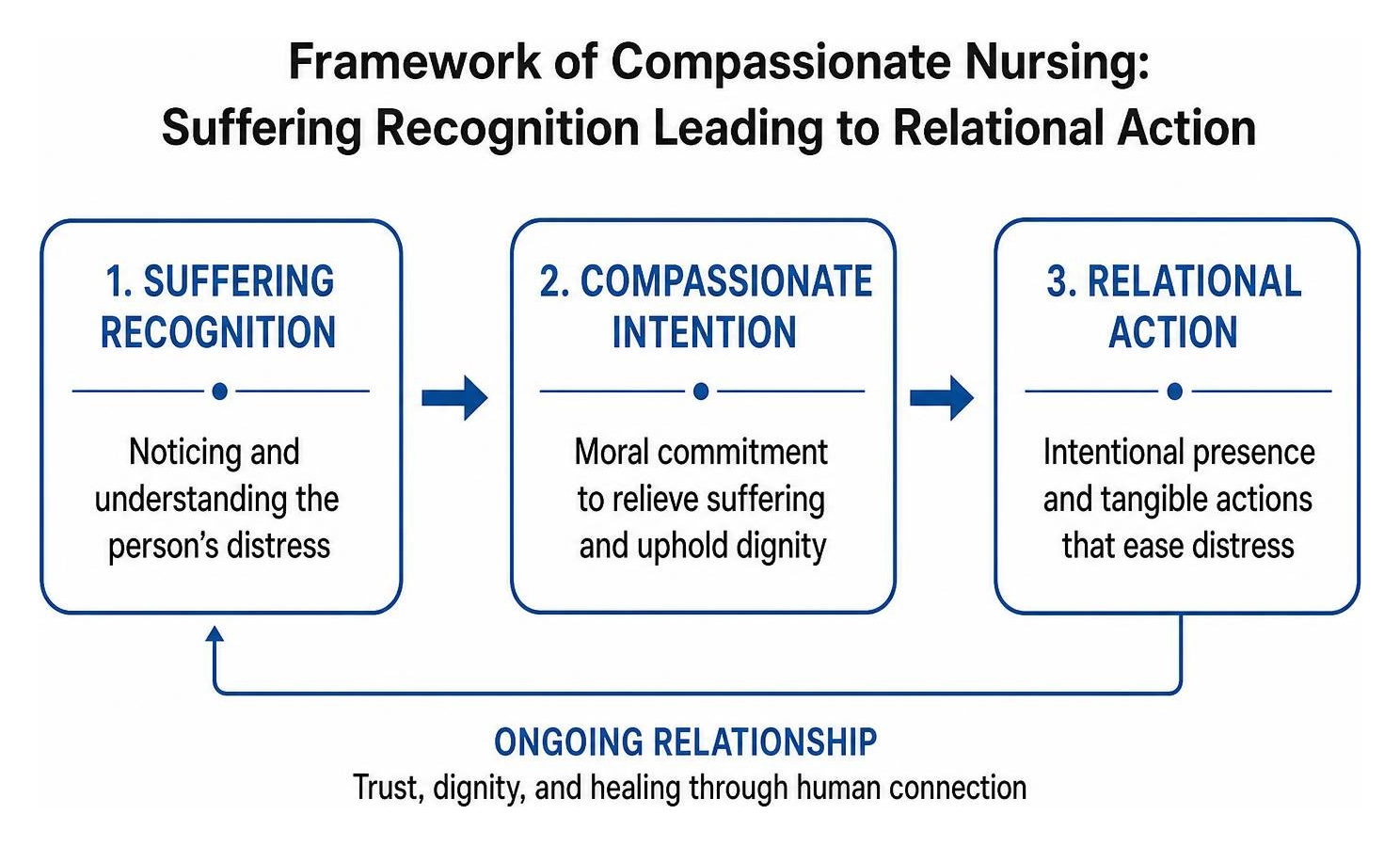
To practice and teach compassion systematically, we must first define it clearly. In modern healthcare literature, compassion is understood not merely as an innate personality trait or a fleeting feeling, but as a deliberate, moral, and relational action.
A formal Walker and Avant framework analysis identifies that compassion begins when a caregiver recognizes genuine patient suffering and responds with intentional presence and tangible steps to alleviate that distress.
This aligns closely with foundational nursing theories, including Dr. Jean Watson’s Caring Science and her “clinical caritas processes.” Watson framed care as a transpersonal connection—an authentic, human-to-human encounter that transcends basic biological maintenance to nurture emotional and spiritual healing.
Differentiating Compassion, Empathy, and Sympathy
In clinical discourse, sympathy, empathy, and compassion are often used interchangeably, yet they represent distinctly different psychological and behavioral responses.
| Concept | Emotional Stance | Clinical Engagement | Primary Outcome |
|---|---|---|---|
| Sympathy | Pity or sorrow from a distance; external perspective. | Passive acknowledgment of a difficult situation. | Acknowledges distress without necessarily creating connection. |
| Empathy | Shared resonance; feeling with the patient and understanding their reality. | Perspective-taking and active listening. | The patient feels understood, validated, and less isolated. |
| Compassion | Deep awareness of suffering coupled with an active drive to relieve it. | Proactive, relational, and clinical intervention. | Alleviates emotional or physical suffering while restoring dignity. |
While sympathy observes pain from afar and empathy internalizes that emotion, compassion is actionable. It takes the emotional insight gained from empathy and channels it directly into clinical problem-solving.
The Five Defining Attributes of Compassion in Nursing
Concept analyses across clinical settings highlight five core attributes that make up genuine compassionate care:
- Empathy: The cognitive and affective ability to perceive a patient’s internal emotional state.
- Relational Understanding: Recognizing the patient as a whole person shaped by unique life experiences, family ties, and personal values.
- Intentionality: Making a conscious, purposeful choice to engage with the person behind the diagnosis rather than treating care as an automated task.
- Authentic Presence: Offering undivided attention, emotional availability, and a calm bedside presence (“being with” rather than just “doing for”).
- Action-Oriented Care: Applying clinical interventions, comfort measures, and clear communication directly aimed at easing suffering.
The Multidimensional Pillars of Bedside Compassionate Care

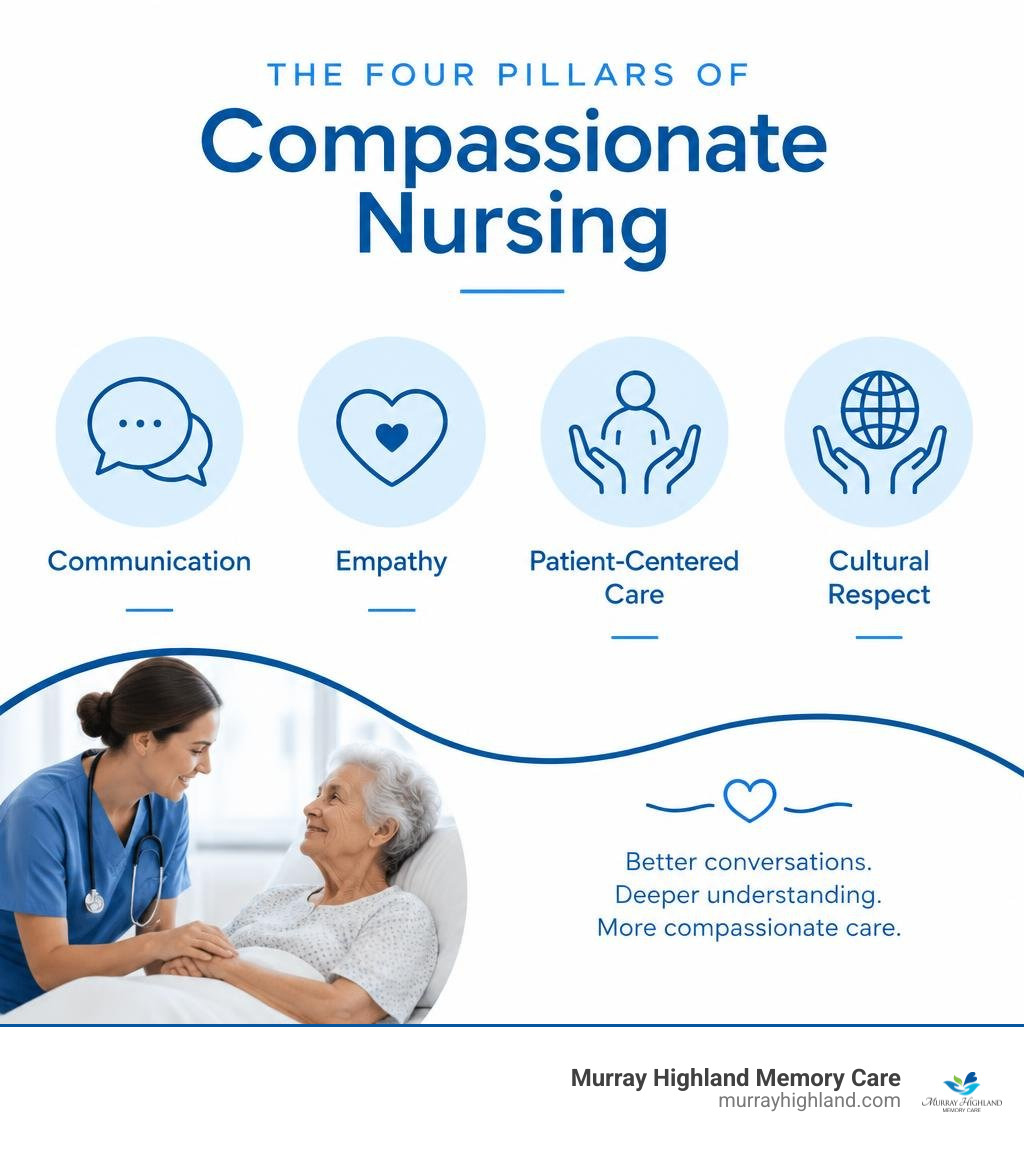
In daily practice, compassion is built on concrete, observable behaviors. Qualitative research involving cardiac nurses, patients, and their family members identified four essential operational pillars: verbal and non-verbal language, empathy activities, organized patient-centered workflows, and cultural adherence (Babaei et al., 2022).
Verbal and Non-Verbal Communication at the Bedside
Communication forms the foundation of bedside trust. Non-verbal cues frequently carry more emotional weight than spoken words, particularly for vulnerable individuals or those experiencing cognitive decline.
- Non-Verbal Cues: Maintaining gentle eye contact, adopting an open and unhurried posture, offering comforting touch (like holding a hand during an anxious moment), and smiling warmly.
- Respecting Personal Space: Simple actions such as knocking before entering a room and introducing oneself preserve dignity and personal autonomy.
- Mindful Language: Using validating phrases (such as “I understand this is frustrating” rather than dismissive statements) and gently explaining clinical steps before performing them.
- Appropriate Humor: Thoughtful, lighthearted moments, gentle humor, and friendly conversation distract from physical discomfort and reduce clinical anxiety.
Cultural Competence and Spiritual Awareness in Patient Encounters
Compassion cannot exist in a vacuum; it must be tailored to the cultural, spiritual, and personal values of each individual (Babaei et al., 2022). A multicultural nurse compassion competence study underscores that sensitivity to cultural backgrounds directly influences how care is received.
Nurses must respect preferences for modesty, accommodate gender-matched caregivers when requested, and support spiritual practices during times of existential distress or end-of-life transitions. Understanding these nuances ensures that clinical interventions comfort patients rather than inadvertently causing emotional friction.
Organizing Patient-Centered and Memory Care Environments
A compassionate environment is structured around the patient’s personal history, daily rhythms, and unique emotional needs. In memory care, where cognitive loss can cause disorientation, this individualized structure is vital.
We implement personalized care approaches in memory care to ensure daily routines honor each resident’s life narrative. By deeply understanding Alzheimer’s progression and care, our caregivers anticipate behavioral expressions of distress—such as restlessness or agitation—as unspoken requests for comfort.
Our boutique, family-focused care services are designed so that 24/7 support, chef-prepared meals, and quiet home-like spaces reduce overstimulation and foster comfort.
Systemic Barriers, Leadership, and Educating the Next Generation

Despite its universal value, delivering compassionate care faces significant hurdles across modern healthcare systems. Task-heavy workflows, documentation burdens, and systemic staffing constraints often squeeze out the time needed for relational care (Moran et al., 2021).
According to the ICN global nursing report, compassion must serve as healthcare’s “true North,” guiding health policy, educational curricula, and workplace safety initiatives worldwide.
Overcoming Staffing Shortages and Workload Pressures
Heavy nurse-to-patient ratios present a persistent barrier to consistent bedside connection. For instance, in many international acute-care environments, such as Chinese public hospitals where approximately 80,000 baccalaureate nursing students enter clinical rotations each year, shift ratios frequently exceed 1:10.
When nurses face high patient loads and extensive administrative tasks, care risks becoming purely transactional. Relational moments—such as sitting with a distressed patient or comforting an anxious family member—are often the first things cut when shifts become overwhelming. Understanding these pressures is equally vital when navigating senior caregiver responsibilities, where balancing technical duties with personal emotional support requires realistic, sustainable staffing models.
Teaching and Internalizing Compassion in Nursing for Students and Graduates
Compassion is an actionable discipline that can be cultivated and refined through dedicated mentorship:
- Clinical Role Modeling: Mentors and clinical instructors must demonstrate how to combine swift technical interventions with genuine warmth.
- Apprenticeship Models: Pairing students with experienced nurses allows them to observe relational subtleties firsthand.
- Reflective Journaling and Debriefing: Providing structured time after difficult patient interactions helps new graduates process grief, ethical dilemmas, and emotional strain.
- Communication Simulation: Practicing tough conversations—such as delivering difficult diagnoses or de-escalating distress—builds practical confidence and sensitivity.
Nurse Leadership and Institutional Support Frameworks
Compassionate care cannot flourish at the bedside if leadership fails to extend that same care to staff (Malliarou, 2022). Nurse executives and managers must establish environments of psychological safety, where emotional challenges are openly discussed rather than hidden.
Recognizing compassionate acts, maintaining safe staffing levels, and offering structured debriefs after traumatic clinical events help protect caregivers from burnout and moral distress.
Sustaining the Caregiver: Clinical Expertise, Resilience, and Preventing Compassion Fatigue
Compassionate care cannot be sustained by exhausted staff. “You cannot pour from an empty cup” is a practical reality in healthcare. Prolonged exposure to suffering without adequate institutional backing and self-care leads directly to compassion fatigue, secondary traumatic stress, and clinical burnout.
The Intersection of Clinical Expertise and Empathetic Care
There is a powerful synergy between clinical proficiency and compassionate delivery. Seasoned nurses with refined clinical instincts can spot subtle signs of deterioration—such as shallow breathing, shifting posture, or quiet restlessness—far earlier than novices.
As highlighted in an integrative review of palliative nursing values, clinical expertise frees up cognitive space (Moran et al., 2021). When technical procedures become second nature, the caregiver can focus fully on calming the patient and providing emotional reassurance.
Mitigating Compassion Fatigue Through the CARE Heuristic and Self-Care
To protect healthcare professionals from emotional exhaustion, researchers developed the CARE heuristic for addressing nurse burnout. This evidence-based model combines emotional regulation with actionable workplace coping:
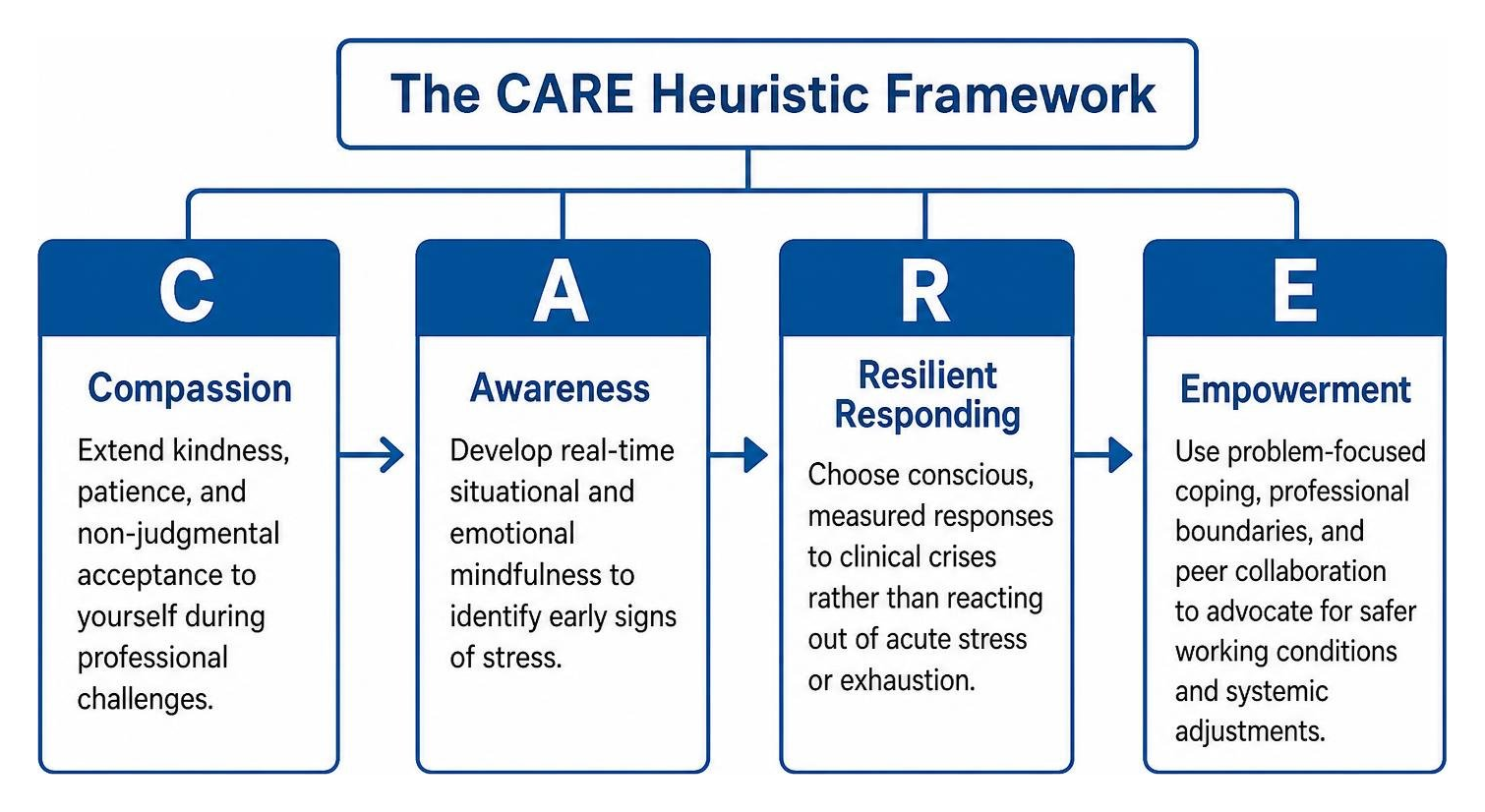
- C – Compassion (and Self-Compassion): Extending kindness, patience, and non-judgmental acceptance to oneself during moments of professional difficulty or perceived failure.
- A – Awareness: Developing real-time situational and emotional mindfulness to identify the early physical and psychological signs of stress.
- R – Resilient Responding: Choosing conscious, measured responses to clinical crises rather than reacting out of acute autonomic stress or emotional exhaustion.
- E – Empowerment: Using problem-focused coping, professional boundaries, and peer collaboration to advocate for safer working conditions and systemic adjustments.
Integrating brief mindfulness practices, peer check-ins, balanced nutrition, proper sleep hygiene, and healthy emotional boundaries enables nurses to maintain long-term compassion without sacrificing their own health.
Frequently Asked Questions About Compassion in Nursing
How does compassionate nursing directly improve measurable clinical outcomes?
Compassionate nursing significantly reduces patient anxiety and physiological stress, which directly supports recovery. Patients who feel seen and respected report higher trust in their healthcare teams, leading to improved adherence to medication schedules, better participation in physical rehabilitation, and reduced 30-day hospital readmissions.
What are the earliest warning signs of compassion fatigue among nurses?
Early indicators include persistent emotional numbness, growing cynicism toward patients and colleagues, chronic physical exhaustion, dread before shifts, sleep disturbances, irritability, and feelings of professional inadequacy. Recognizing these signs early allows for timely mental health support and workload adjustments before severe burnout sets in.
How can nurses maintain compassion during severe understaffing?
When time is limited, compassion shifts toward high-impact “micro-moments” of human connection. These include taking five seconds to make calm eye contact while adjusting an IV, offering a reassuring touch on a shoulder, addressing the patient warmly by their preferred name, and actively listening while recording vital signs.
Conclusion
Compassionate nursing transforms routine medical interventions into therapeutic, healing relationships. Far from being a soft luxury, compassion is an evidence-based clinical competency that safeguards patient safety, enriches nurse satisfaction, and upholds human dignity across every healthcare setting.
In our residential memory care home in Beaverton, Oregon, we see every day how patience, deep listening, and a family-focused environment bring peace to seniors living with dementia. To explore practical ways to foster empathetic connections in daily caregiving, read our guide on lessons on care with compassion.
References
Babaei S, Taleghani F, Farzi S. “Components of Compassionate Care in Nurses Working in the Cardiac Wards: A Descriptive Qualitative Study..” Journal of caring sciences, 2022. PMCID PMC9720497. Malliarou M. “Compassionate Health Care..” Healthcare (Basel, Switzerland), 2022. PMCID PMC9818780. Moran S, Bailey M, Doody O. “An integrative review to identify how nurses practicing in inpatient specialist palliative care units uphold the values of nursing..” BMC palliative care, 2021. PMCID PMC8285858.