Managing Care for Loved Ones with Advanced Dementia and Heart Failure

Caring for Someone With End Stage Dementia and Congestive Heart Failure
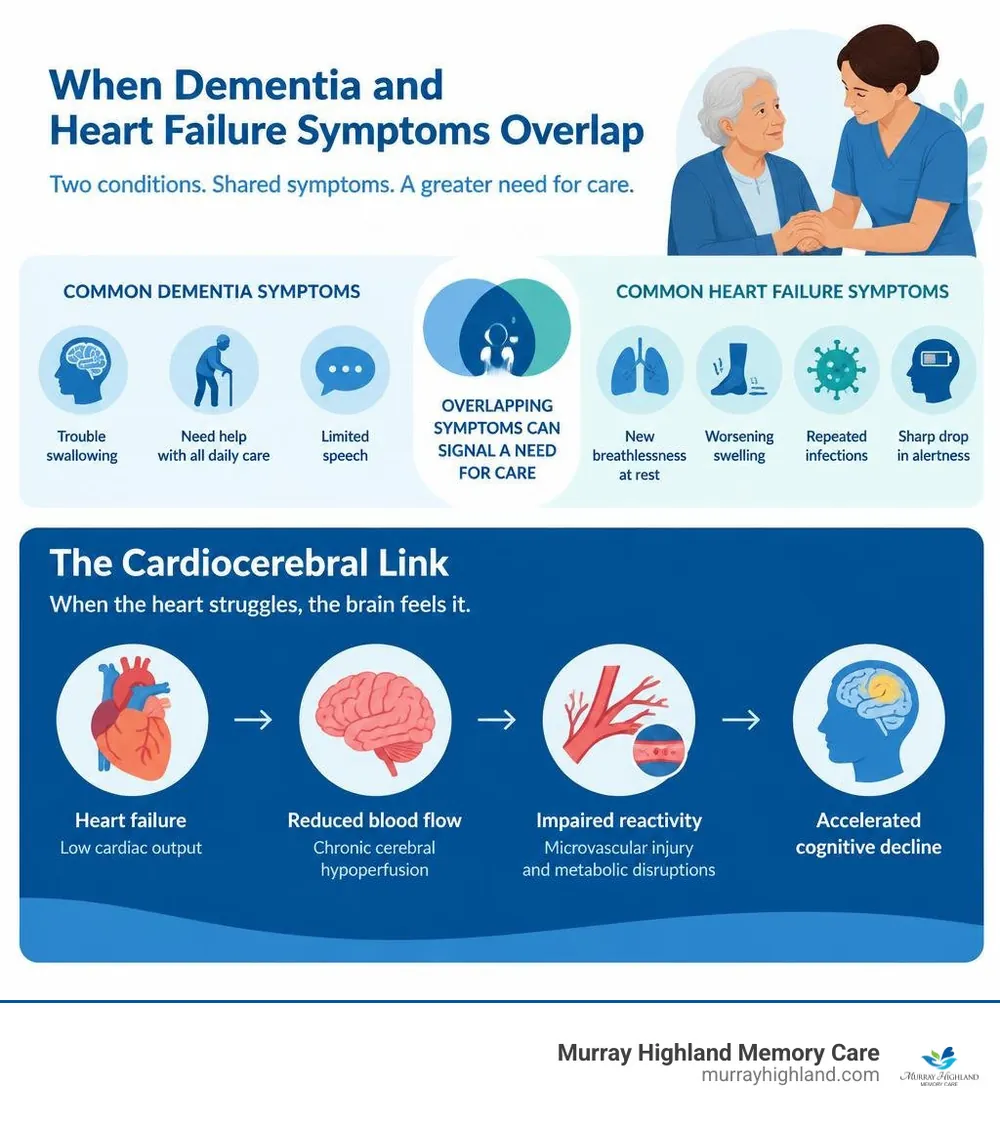
For families facing end stage dementia and congestive heart failure, the most useful step is to watch for changes from the person’s usual condition. Trouble swallowing, needing help with all daily care, and limited speech may develop over time. New breathlessness at rest, worsening swelling, repeated infections, or a sharp drop in alertness need a call to the care team. Sudden, severe breathing trouble needs urgent medical help.
The two conditions can make each other harder to manage. Heart failure may worsen confusion and fatigue, while dementia can make it difficult for a person to explain pain or breathing problems. This guide will help you spot overlapping symptoms, ask clearer questions, and plan care around your loved one’s comfort and wishes.
The Cardiocerebral Link: How Heart Failure Accelerates Cognitive Decline
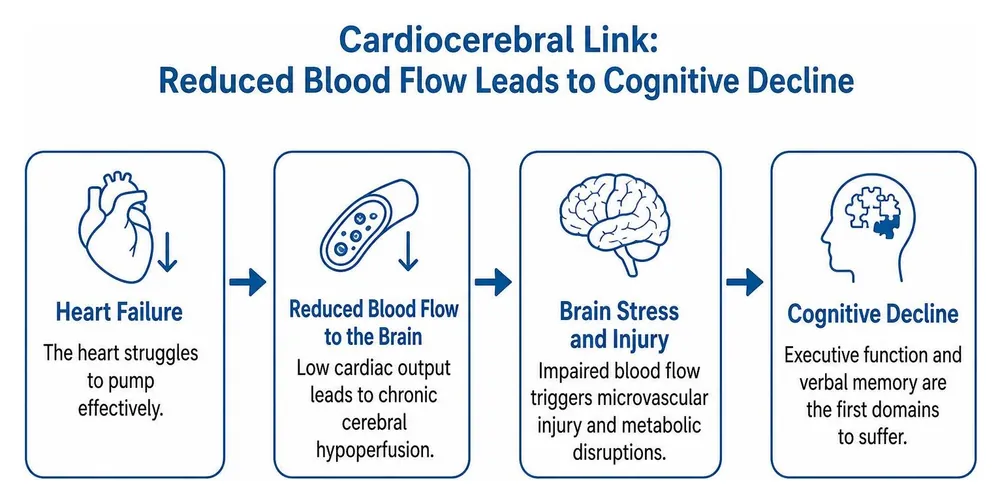
When the heart struggles to pump effectively, every organ in the body feels the strain, but the brain is uniquely vulnerable. The brain relies on a steady, robust supply of oxygenated blood. In congestive heart failure (CHF), low cardiac output leads directly to chronic cerebral hypoperfusion—a state where brain cells receive inadequate blood flow. Over time, impaired cerebrovascular reactivity makes it difficult for cerebral blood vessels to adjust to shifts in blood pressure, triggering microvascular injury and metabolic disruptions.
This clinical cascade is often described as cardiogenic dementia. The connection is striking: research shows that the risk of cognitive impairment is 1.96-fold greater in individuals with congestive heart failure (Cermakova et al., 2015). In a detailed review of heart failure and cognitive impairment, researchers highlighted that in individuals with cognitive impairment (Mini-Mental State Examination score below 24), the prevalence of CHF was 20.2%, compared to just 4.6% in those with intact cognition.
When both conditions coexist, executive function (the ability to plan, focus, and multitask) and verbal memory are typically the first cognitive domains to suffer. A person may suddenly struggle to follow multi-step daily routines, remember recent conversations, or recognize their own physical distress.
Mechanisms of Decline: Calcium Leaks and Vascular Injury
Beyond blood flow changes, scientific discoveries have uncovered cellular mechanisms connecting cardiac dysfunction directly to brain health. Researchers have identified that heart failure can cause a persistent “calcium leak” inside neurons through dysfunctional ryanodine receptor type 2 channels—the exact same channel types involved in heart muscle dysfunction. This intracellular calcium leak disrupts neuronal signaling and activates biochemical pathways closely associated with neurodegeneration.
Furthermore, heart failure frequently drives small-vessel ischemic changes throughout the brain. This explains why, across the various types of dementia, vascular dementia is the most prevalent form among patients with coexisting heart failure (accounting for roughly 36% of cases, followed by other dementias at 28%, mixed dementia at 20%, and Alzheimer’s disease at 16%).
Whether a loved one has heart failure with preserved ejection fraction (HFpEF) or heart failure with reduced ejection fraction (HFrEF), the burden on cerebral circulation remains substantial. In older adults over 80, HFpEF is exceptionally common and causes significant cognitive decline alongside physical frailty.
Statin Therapy and Cardiovascular Interventions in Cognitive Health
Cardiovascular medications can play a dual role in protecting both the heart and the brain earlier in the disease course. For example, a landmark study on statin use and dementia risk in heart failure showed that statin therapy was associated with a 20% lower overall risk of incident dementia (Ren et al., 2024). Breaking down the subtypes:
- Alzheimer’s disease risk was reduced by 28%.
- Vascular dementia risk dropped by 18%.
- Unspecified dementia risk decreased by 20%.
These neuroprotective benefits stem from lipid-lowering capabilities and pleiotropic properties that reduce vascular inflammation and improve endothelial health.
However, as a person transitions toward end-of-life care, goals change. While statins and aggressive cardiovascular interventions offer immense value in earlier stages, the priority in end-stage disease shifts toward comfort. Clinicians and families often engage in deprescribing—safely discontinuing preventative medications that no longer contribute directly to daily quality of life or symptom relief.
Recognizing Symptoms of End Stage Dementia and Congestive Heart Failure
Navigating dual diagnoses requires recognizing which symptoms belong to cardiac decline, which stem from cognitive loss, and which indicate the body is preparing for its final transition. Recognizing these subtle shifts can guide families when assessing the signs that your loved one may need memory care or palliative comfort services.
| Clinical Domain | Late-Stage Dementia Indicators | End-Stage Congestive Heart Failure (NYHA Class IV / Stage D) | Shared End-of-Life Signs |
|---|---|---|---|
| Physical & Functional | Bed-bound state; total dependence for all activities of daily living (ADLs); rigid limbs | Severe dyspnea with minimal movement or at rest; inability to lie flat (orthopnea); severe peripheral edema | Profound physical frailty; extreme exhaustion; prolonged sleeping; cold extremities |
| Cognitive & Behavioral | Speech limited to single words or vocalizations; loss of recognition of familiar faces | Anxiety related to air hunger; sudden acute delirium from low cerebral oxygenation | Terminal restlessness; agitation; decreased responsiveness; slipping into unarousable sleep |
| Respiratory & Systemic | Dysphagia (swallowing failure); aspiration risk; recurrent pneumonia | Persistent cardiac cough; pink frothy or clear sputum; sudden fluid weight gain | Cheyne-Stokes breathing (alternating rapid breathing and apnea); mottled skin |
| Nutritional & Intake | Inability to chew or swallow; pocketing food; complete loss of thirst/hunger drive | Cardiac cachexia (profound muscle wasting); early satiety due to bowel wall edema | Complete cessation of oral intake; dry mucous membranes |
Distinguishing Late-Stage Dementia from Active Dying
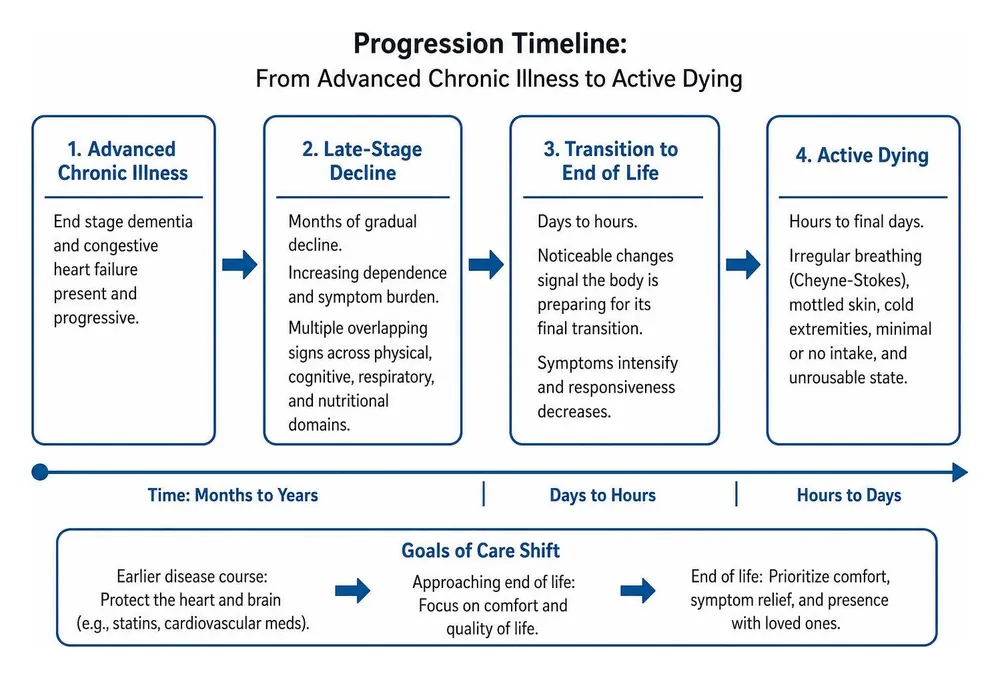
Understanding the timeline of late-stage dementia helps families distinguish between chronic decline and active dying:
- Late-Stage Dementia Signs: The person may remain in this phase for months. Hallmarks include minimal speech (fewer than six intelligible words per day), progressive loss of ambulation, total urinary and fecal incontinence, and significant difficulty swallowing regular food textures.
- Active Dying Indicators: This transition typically occurs over days or hours. You may observe distinct changes such as Cheyne-Stokes respiration (irregular breathing cycles with long pauses), peripheral cyanosis, mottling (a purplish, lace-like discoloration starting on the knees, feet, and hands), dramatically reduced urine output, and an unarousable state of consciousness.
Overlapping Signs in End Stage Dementia and Congestive Heart Failure
When both illnesses converge, symptoms amplify one another:
- Terminal Restlessness and Anxiety: Air hunger from pulmonary congestion can trigger severe panic. When dementia prevents a person from understanding why they cannot catch their breath, it often manifests as pulling at clothes, tossing in bed, or intense agitation.
- Cardiac Cachexia and Loss of Appetite: Heart failure increases inflammatory cytokines and causes fluid retention in the gut, making a person feel prematurely full. Combined with dementia-related appetite loss, rapid weight and muscle loss occur.
- Fluctuating Delirium: Low cardiac output combined with baseline neurodegeneration creates frequent episodes of sudden, severe confusion, completely disrupting normal sleep-wake cycles.
Complex Challenges in Symptom and Medication Management
Managing advanced heart failure alongside severe cognitive decline presents significant clinical hurdles. Standard cardiac care relies heavily on patient self-management—monitoring daily weights, adhering to strict sodium and fluid restrictions, and tracking complex pill regimens. When a person has advanced dementia, they cannot self-report fluid retention or remember to restrict fluids.

Polypharmacy is another hurdle; patients with this dual diagnosis take an average of 8 or more daily medications (Cermakova et al., 2015). Standard regimens of loop diuretics, beta-blockers, ACE inhibitors, and inotropic agents must be delicately balanced against blood pressure drops and worsening kidney function. A practical clinical case summary on post-hospital heart failure care illustrates how fragile this equilibrium is: aggressive diuresis can rapidly resolve acute pulmonary congestion, but in older adults with cognitive impairment, it requires meticulous caregiver oversight to prevent dehydration and delirium.
Addressing Dysphagia and Alternative Medication Routes
As dementia reaches its final stages, dysphagia (swallowing dysfunction) almost inevitably occurs. Forcing large cardiac pills can lead to choking or life-threatening aspiration pneumonia. When swallowing becomes unsafe, the care approach must pivot.
Within high-quality settings utilizing personalized care approaches in memory care communities, medical teams adapt delivery methods:
- Liquid Formulations: Concentrated liquid drops for essential comfort medications.
- Transdermal Patches: Skin patches (such as scopolamine for respiratory secretions or fentanyl for intractable pain) that bypass the gastrointestinal tract entirely.
- Subcutaneous Infusion (Syringe Drivers): Continuous or as-needed subcutaneous delivery of loop diuretics (like furosemide) to manage fluid overload, and opioids to relieve breathlessness without relying on oral intake.
Pain Assessment in Non-Verbal Patients
Patients with advanced dementia rarely say, “My chest hurts” or “I feel short of breath.” Instead, physical distress reveals itself through non-verbal cues. Caregivers should watch for:
- Facial grimacing, furrowed brows, or clenching the jaw.
- Moaning, groaning, or repetitive vocalizations during movement.
- Tense body language, rigid posturing, or guarding specific areas.
- Sudden behavioral resistance during basic hygiene care.
Tools like the PAINAD (Pain Assessment in Advanced Dementia) scale help clinicians objectively score breathing, vocalization, facial expression, body language, and consolability. Low-dose opioids (such as sublingual morphine) are exceptionally effective in these scenarios, acting as dual-purpose agents that relieve physical pain while relaxing the pulmonary vasculature to ease the sensation of air hunger.
Prognosis, Frailty, and Leading Causes of Mortality
Predicting life expectancy with dual diagnoses is challenging. In a comprehensive registry study of patients with both heart failure and dementia, the overall 1-year survival rate was 76% (Cermakova et al., 2015). For those reaching Stage D (end-stage) heart failure, studies note a median life expectancy of just 6 to 12 months. Overall, living with congestive heart failure shortens life expectancy by approximately 10 years compared to peers without the condition.
Frailty plays a dominant role in determining prognosis. When evaluated using the Frailty Staging System (FSS), patients with class I frailty demonstrated a median survival of 101.2 months, whereas those in class III (severe combined physical and cognitive frailty) experienced a drop in median survival to 60.0 months.
As physical dependence accelerates, navigating the role of a senior caregiver becomes an around-the-clock commitment, often marked by exhausting cycles of emergency room visits and hospital readmissions.
Primary Causes of Death in Dual-Diagnosis Patients

When an individual lives with both late-stage neurodegeneration and cardiac disease, the two conditions interact to heighten mortality risk. The most common causes of death include:
- Aspiration Pneumonia: Due to compromised swallowing reflexes and general immune weakness, pneumonia remains one of the single most frequent causes of death in dementia patients.
- Acute Decompensated Heart Failure and Pulmonary Edema: Sudden fluid accumulation in the lungs that overwhelms cardiac output.
- Cardiogenic Shock and Renal Failure: The failing heart can no longer maintain blood pressure, leading to multi-organ system shutdown.
- Sudden Cardiac Arrest: Lethal arrhythmias resulting from chronic myocardial strain and electrolyte shifts.
Advance Care Planning and End-of-Life Support Pathways
Given the unpredictable trajectory of these dual illnesses, having proactive advance care planning discussions is vital. Creating clear advance directives, appointing a durable healthcare proxy, and completing Physician Orders for Life-Sustaining Treatment (POLST) forms ensures that medical interventions align with the individual’s personal values.
Expert palliative care perspectives on chronic disease management emphasize establishing goals of care well before acute crises occur.
One critical decision involves artificial nutrition and hydration. In end-stage dementia, the placement of enteral feeding tubes (such as PEG tubes) does not prolong survival, prevent aspiration, or improve quality of life. In fact, for a patient with congestive heart failure, tube feedings frequently deliver excessive fluid loads directly into the digestive tract, exacerbating pulmonary edema and swelling.
Transitioning toward dedicated care services that emphasize comfort-focused hand feeding honors natural biological changes while avoiding uncomfortable medical interventions.
Tailored Hospice Support for End Stage Dementia and Congestive Heart Failure
Hospice care is designed for individuals with a life expectancy of six months or less if the disease follows its natural course. Initiating specialized end-of-life hospice care options ensures an interdisciplinary team—comprising palliative physicians, specialized nurses, social workers, and spiritual counselors—supports both the individual and their family.
Hospice services tailored to dual diagnoses provide:
- Intensive, at-home symptom palliation for breathlessness, fluid buildup, and agitation.
- In-home delivery of all comfort-related medical supplies, specialized beds, and oxygen equipment.
- Direct family guidance, respite support, and bereavement counseling to alleviate caregiver burnout.
Frequently Asked Questions About Advanced Dementia and Cardiac Disease
What is the life expectancy for someone with both end-stage dementia and congestive heart failure?
While individual trajectories vary, clinical studies indicate that Stage D (end-stage) heart failure carries a median life expectancy of 6 to 12 months. In broad cohort studies of patients with comorbid heart failure and dementia, the 1-year survival rate is approximately 76% (Cermakova et al., 2015). Severe physical frailty, bed-bound status, and recurrent infections signal that the timeline may be considerably shorter.
How do doctors manage fluid retention when a patient can no longer swallow diuretic pills?
When swallowing oral pills becomes unsafe, hospice and palliative teams use alternative delivery routes. Loop diuretics can be administered via small subcutaneous butterfly needles or continuous subcutaneous syringe pumps. Topical medications, concentrated oral liquids placed under the tongue, and careful fluid comfort measures are also utilized to relieve swelling and air hunger without forcing oral intake.
Why are feeding tubes generally discouraged in end-stage dementia patients with heart failure?
Feeding tubes do not prevent aspiration pneumonia or extend life in advanced dementia patients. In individuals with congestive heart failure, artificial tube formulas can easily cause fluid overload, rapidly worsening pulmonary edema, breathlessness, and peripheral swelling. Palliative guidelines recommend gentle, comfort-focused hand feeding (giving small bites of favorite purees for pleasure) as long as the person is willing and able.
Conclusion
Caring for a loved one with concurrent advanced dementia and heart failure is an emotionally demanding and complex journey. By shifting the clinical focus from burdensome, aggressive medical interventions toward holistic, comfort-driven palliative care, families can preserve dignity and provide profound peace in life’s final chapters.
At Murray Highland Memory Care, we understand these intricate dynamics intimately. Within our boutique, family-owned residential memory care community in Beaverton, Oregon, we provide a warm, home-like setting featuring chef-prepared meals and personalized 24/7 care tailored to each resident’s unique health journey. If you are navigating care options, understanding the stages of Alzheimer’s and consulting with specialized memory care professionals can help you build the supportive, compassionate environment your family deserves.
Scientific References
Cermakova P, Lund LH, Fereshtehnejad SM, Johnell K, Winblad B, Dahlström U, Eriksdotter M, Religa D. “Heart failure and dementia: survival in relation to types of heart failure and different dementia disorders..” European journal of heart failure, 2015. PMCID PMC4674979. Ren QW, Katherine Teng TH, Tse YK, Wei Tsang CT, Yu SY, Wu MZ, Li XL, Hung D, Tse HF, Lam CSP, Yiu KH. “Statins and risks of dementia among patients with heart failure: a population-based retrospective cohort study in Hong Kong..” The Lancet regional health. Western Pacific, 2024. PMCID PMC10827582.