

Memory Loss Tests for Elderly Adults: Where to Start
A memory loss test for elderly adults can flag changes in thinking, but it cannot diagnose dementia. The Mini-Cog is a quick screen often used at a medical visit. SAGE can be completed at home and brought to a doctor for scoring. Clinicians may also use the MoCA, GPCOG, or SLUMS to check different thinking skills.
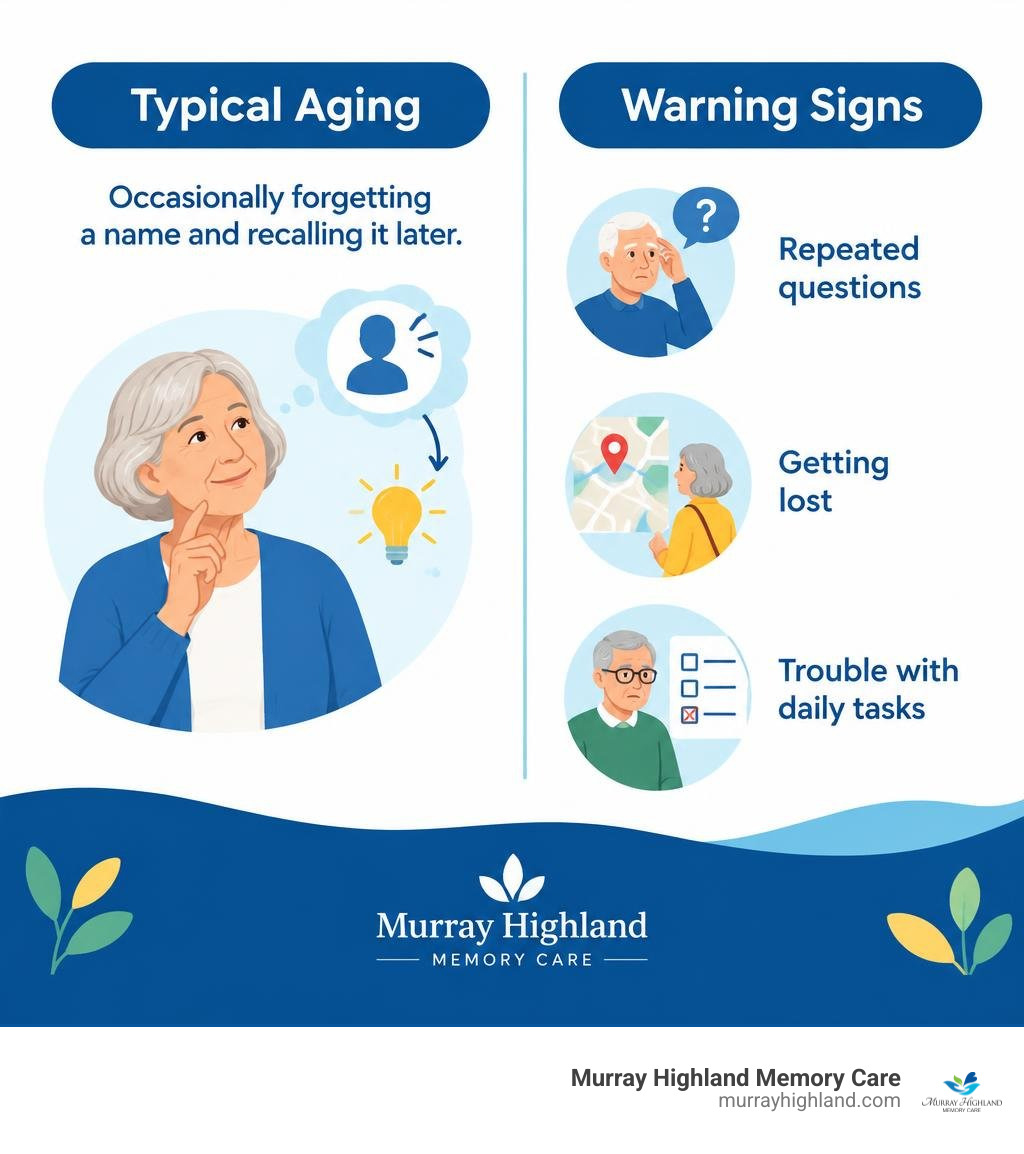
If your parent keeps asking the same questions, gets lost in familiar places, or struggles with daily tasks, book a medical visit even if a screening result seems normal. A doctor can look for the cause and decide what testing is needed.
Early Signs of Cognitive Decline and When to Get Evaluated
It is completely normal to misplace reading glasses or take an extra minute to remember an acquaintance’s name. However, when lapses in short-term memory begin disrupting daily routines, it is time to pay closer attention.
Cognitive decline involves more than occasional absentmindedness. It often manifests as disorientation to time or place, difficulties with executive function (such as managing a checkbook or following a recipe), and struggling to find familiar words during casual conversations.
Recognizing the signs that your loved one may need memory care starts with understanding these early behavioral shifts. Identifying changes promptly matters because a massive diagnostic gap exists in senior healthcare: at least half of older persons with dementia in the United States never receive a formal diagnosis. Furthermore, primary care clinicians miss up to 76% of dementia cases when relying solely on routine physicals and basic medical histories without standardized cognitive tools.
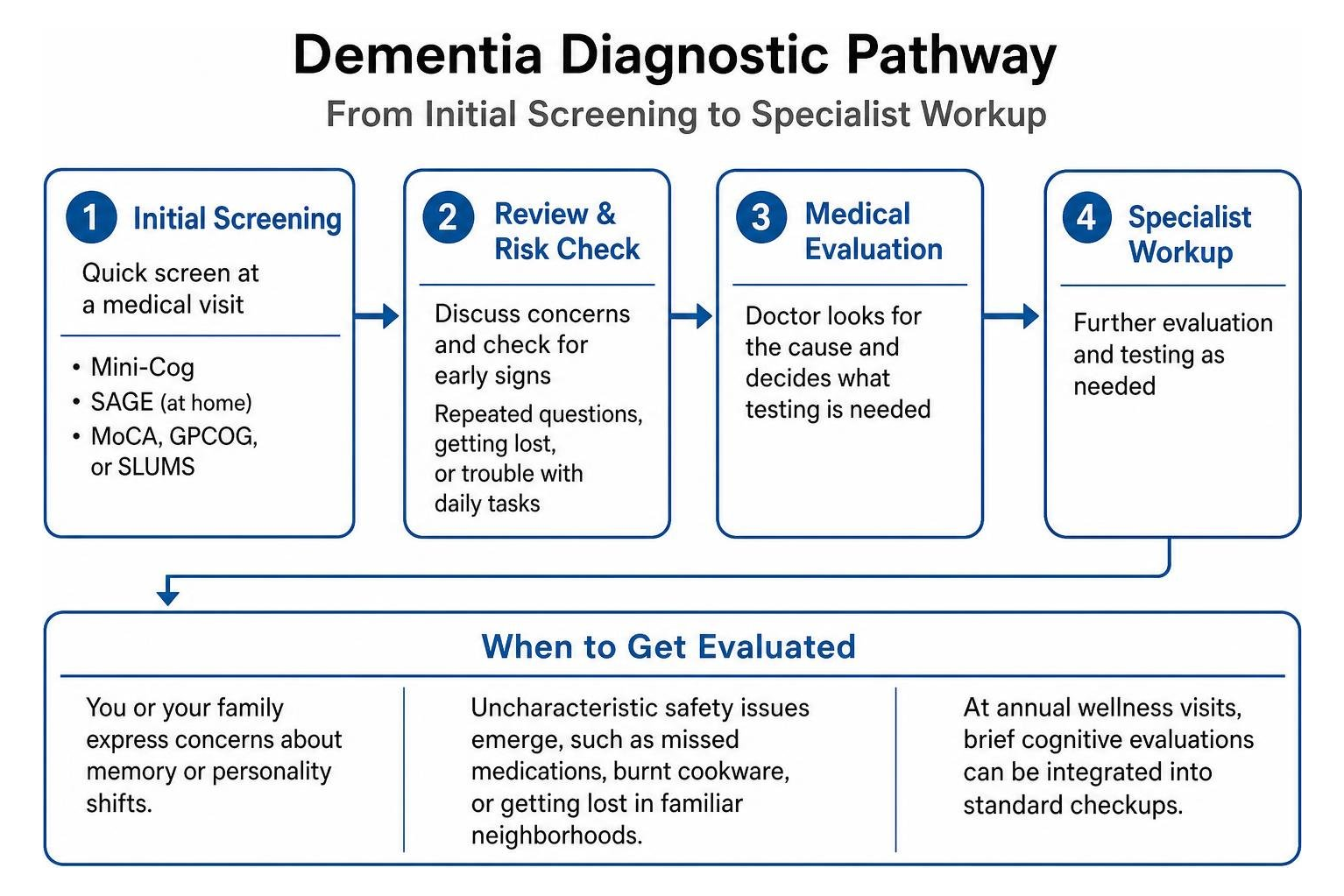
Routine cognitive evaluations should be performed when:
- An older adult or their family expresses concerns about memory or personality shifts.
- Uncharacteristic safety issues emerge, such as missed medications, burnt cookware, or getting lost in familiar neighborhoods.
- Beneficiaries attend their annual wellness visits, where brief cognitive evaluations can be integrated into standard checkups.
Catching changes early allows families to plan ahead, identify reversible medical conditions (such as thyroid imbalances or vitamin deficiencies), explore early therapeutic interventions, and evaluate different types of dementia.
5 Common Types of Memory Loss Test for Elderly Adults

Standardized screenings are designed to evaluate multiple brain regions quickly. They check attention span, short-term recall, language fluency, and visuospatial organization. While no brief questionnaire provides a definitive diagnosis on its own, these tools serve as vital triage instruments to determine if a comprehensive medical evaluation is warranted.
| Screening Tool | Administration Time | Scoring Range | Format | Primary Strengths |
|---|---|---|---|---|
| Mini-Cog | ~3 minutes | 0 to 5 points | Clinician-administered (Paper) | Ultra-fast triage; minimal language/education bias |
| SAGE | 10 to 15 minutes | 0 to 22 points | Self-administered (Home or Clinic) | Comprehensive self-evaluation; 4 interchangeable versions |
| MoCA-Brief | <5 minutes | 0 to 12 points | Clinician-administered (Paper/Digital) | High sensitivity (87.9%) for mild impairment |
| GPCOG | 4 to 6 minutes | 0 to 15 points (Combined) | Patient test + Informant interview | Combines patient performance with family observations |
| SLUMS | 7 to 10 minutes | 0 to 30 points | Clinician-administered (Paper) | Education-adjusted; detects subtle annual changes |
The Mini-Cog: A 3-Minute Memory Loss Test for Elderly Patients
The Mini-Cog is one of the most widely utilized clinical triage instruments in primary care. As detailed in this overview of the Mini-Cog screening tool, it takes approximately three minutes to administer and requires minimal training for healthcare staff to conduct accurately.
The test consists of three simple steps:
- Three-Word Registration: The clinician speaks three unrelated words clearly (for example: banana, sunrise, chair) and asks the individual to repeat them to ensure they were registered.
- Clock Drawing Task: The individual is given a blank sheet of paper and instructed to draw a clock face, place all twelve numbers in their correct positions, and set the hands to a specific time (commonly 10 minutes past 11).
- Three-Word Recall: The individual is asked to recall the three words given at the start of the assessment.
Scoring operates on a 0 to 5 point scale:
- Recalling 0 words indicates a positive screen for cognitive impairment regardless of the clock.
- Recalling 1 or 2 words with an abnormal clock drawing indicates a positive screen (total score 0 to 2).
- Recalling 1 or 2 words with a correctly drawn clock (which awards 2 points), or recalling all 3 words (scores 3 to 5), represents a negative screen.
A positive screen (score 0 to 2) indicates a need for comprehensive diagnostic follow-up rather than a standalone diagnosis of dementia.
The SAGE Assessment: A Take-Home Memory Loss Test for the Elderly
The Self-Administered Gerocognitive Exam (SAGE) was developed by researchers at The Ohio State University to offer an accessible, pen-and-paper evaluation that individuals can take independently. Unlike tests requiring real-time clinician prompting, SAGE can be printed at home or completed in a waiting room.
As outlined in medical guidance on SAGE test administration and results, the assessment contains 12 questions spanning orientation, memory, executive functioning, visuospatial reasoning, and language. Published research on SAGE test accuracy demonstrates a 79% sensitivity rate and a low 5% false-positive rate when distinguishing individuals with cognitive impairment from cognitively normal peers.
Scoring is out of 22 points and must be calculated by a medical professional:
- 17 to 22 points: Normal cognitive function.
- 15 to 16 points: Mild cognitive impairment indicated; warrants medical evaluation.
- 14 points or lower: Indicates more significant cognitive issues requiring diagnostic assessment.
SAGE features four interchangeable forms, allowing doctors to re-administer the test annually to track progression without patients memorizing the questions.
MoCA and the 4-Item MoCA-Brief
The full Montreal Cognitive Assessment (MoCA) is a renowned 30-point evaluation designed to catch mild cognitive impairment that standard examinations might miss. To address clinic settings, researchers developed a shortened variant (Liew, 2019).
As highlighted in case-finding research on MoCA-Brief, this 4-item version incorporates:
- Clock-drawing (visuospatial and executive function)
- Tap-at-letter-A (vigilance and sustained attention)
- Orientation to time and place
- Delayed five-word recall
The MoCA-Brief accounts for 85.9% of the variability found in the full MoCA. At an optimal cut-off score of less than 10 (or less than 9 for individuals with 12 or fewer years of formal education), the 4-item test demonstrated an 87.9% sensitivity and 87.6% specificity in detecting dementia.
GPCOG: Two-Step Primary Care Assessment
The General Practitioner Assessment of Cognition (GPCOG) was designed specifically for family physicians. It pairs direct patient examination with vital caregiver insights.
Clinicians follow the standardized GPCOG two-step assessment form:
- Patient Examination (0 to 9 points): Assesses date orientation, clock drawing, recall of a recent news story, and delayed recall of a name and address (e.g., John Brown, 42 West Street, Kensington). Scoring 9 indicates normal cognition; scoring 0 to 4 indicates cognitive impairment.
- Informant Interview (0 to 6 points): If the patient scores 5 to 8, the clinician interviews a family member or caregiver. The informant answers six targeted questions about recent memory changes, word-finding troubles, financial management, medication adherence, and transportation independence.
By combining direct performance with observational data, the GPCOG minimizes test anxiety and provides a realistic picture of day-to-day functional independence.
Saint Louis University Mental Status Exam (SLUMS)
Developed in partnership with the Veterans Affairs medical system, the SLU Mental Status Exam is a 30-point, clinician-administered tool tailored for adults aged 60 and older.
According to established SLU Mental Status Exam guidelines, the test measures eleven distinct domains, including object recall, money calculations, animal naming fluency, clock drawing, geometric shape recognition, and narrative story comprehension.
A key advantage of SLUMS is its built-in educational weighting. Cut-off thresholds adjust depending on whether an individual completed high school:
- High School Education: 27 to 30 (Normal), 21 to 26 (Mild Neurocognitive Disorder), 0 to 20 (Dementia).
- Less Than High School Education: 25 to 30 (Normal), 20 to 24 (Mild Neurocognitive Disorder), 0 to 19 (Dementia).
Administering SLUMS no more than once a year helps geriatricians track cognitive trajectories across the stages of Alzheimer’s while avoiding practice-effect score inflation.
Comprehensive Diagnostic Evaluations Beyond Initial Screening

It is crucial to remember that a brief screening is not a clinical diagnosis. Think of a cognitive screen like a blood pressure reading: a high reading alerts you to a problem, but it doesn’t tell you the underlying cause on its own.
When a screening flags cognitive concerns, physicians initiate a comprehensive diagnostic evaluation:
- Medical History and Physical Exam: Reviewing chronic health conditions, sensory impairments (vision or hearing loss), sleep apnea, and medication regimens (ruling out anticholinergic drugs or sedatives that cloud thinking).
- Laboratory Blood Panels: Checking complete blood counts, thyroid-stimulating hormone (TSH), metabolic panels, HbA1c, and vitamin B12/folate levels to rule out reversible metabolic causes of delirium or memory loss.
- Brain Imaging: Structural imaging via Magnetic Resonance Imaging (MRI) or Computed Tomography (CT) scans helps rule out normal pressure hydrocephalus, subdural hematomas, strokes, or tumors, while revealing atrophy patterns characteristic of Alzheimer’s disease or vascular dementia.
- Formal Neuropsychological Battery: In-depth cognitive testing lasting several hours to map memory, language, perception, and reasoning strengths and deficits.
Gaining diagnostic clarity empowers families to explore supportive care models early, ensuring safety, dignity, and a smooth transition when understanding Alzheimer’s and how memory care can help.
Frequently Asked Questions About Memory Loss Tests
Can cognitive screening tests be taken accurately at home?
Yes, specific tools like the SAGE test are engineered for home completion. However, testing rules must be followed strictly:
- Complete the questionnaire independently using a pen and paper.
- Do not look at clocks, calendars, newspapers, or mobile phones for orientation prompts.
- Family members should avoid providing hints or correcting wrong answers.
- Never attempt to score the test at home; deliver the completed paper directly to a physician for clinical interpretation.
How do education and language background influence test scores?
Educational attainment, primary language, and cultural background can impact how a person performs on cognitive evaluations. Individuals with fewer years of formal education may score lower on abstract reasoning tasks despite having intact day-to-day functional memory. Conversely, highly educated seniors may compensate during brief screens, masking mild deficits.
Standardized tools address this by adjusting cutoff thresholds based on education (as in SLUMS and MoCA) or by utilizing multilingual validated translations. If an older adult’s native language is not English, testing should always be conducted in their preferred language by a fluent, trained administrator.
What should families do after receiving an abnormal screening result?
An abnormal screening score is a call to action, not a cause for panic. Take these practical steps:
- Schedule a Diagnostic Workup: Request a formal evaluation with a primary care physician, geriatrician, or neurologist.
- Review Everyday Safety: Evaluate driving abilities, medication management, home hazards, and financial safeguards.
- Organize Documents: Update advance healthcare directives, durable power of attorney designations, and estate plans while the individual can actively participate in decision-making.
- Explore Care Solutions: Review long-term residential options to see who qualifies for memory care before urgent needs arise.
Conclusion
Noticing memory lapses in yourself or an aging loved one can feel unsettling, but taking a proactive approach makes all the difference. Utilizing an evidence-based memory loss test for elderly family members—whether through an at-home SAGE questionnaire or a quick Mini-Cog during an annual checkup—provides an objective baseline and opens the door to essential medical support.
At Murray Highland Memory Care, we understand the emotional journey that follows cognitive changes. As a family-owned boutique community in Beaverton, Oregon, we are dedicated to providing personalized 24/7 care, chef-prepared meals, and a warm, home-like environment designed to help seniors thrive. If you are navigating cognitive changes with a loved one, explore our lessons on care with compassion to discover how specialized, heartfelt support can bring peace of mind to your entire family.
References
Liew TM. “A 4-Item Case-Finding Tool to Detect Dementia in Older Persons..” Journal of the American Medical Directors Association, 2019. PMCID PMC6884672.