

End-Stage FTD Symptoms to Watch For
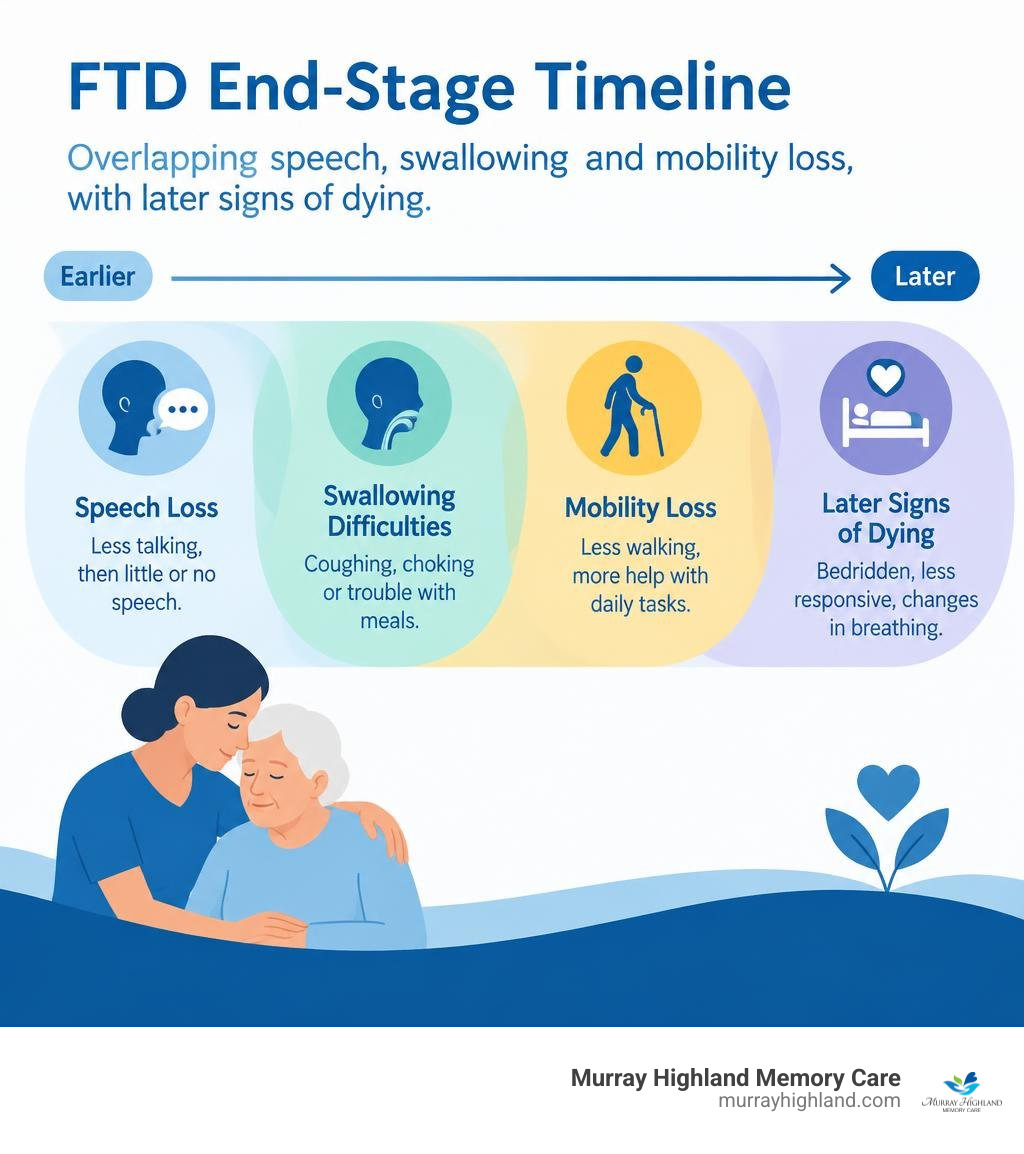
End-stage FTD symptoms often include little or no speech, trouble swallowing, weight loss, loss of walking ability, and bowel or bladder incontinence. A person may need help with every daily task and may eventually become bedridden.
These changes do not follow a set timeline. If your loved one starts coughing during meals, develops a fever, or declines suddenly, contact their care team promptly. Knowing what to watch for can help you ask for support and focus on comfort.
Simple end stage ftd symptoms word guide:
- end stage dementia and congestive heart failure
- how long does stage 6 dementia last
- late stage dementia how long to live
Primary Physical and Neurological End Stage FTD Symptoms

Frontotemporal dementia (FTD) involves progressive neurodegeneration of the frontal and anterior temporal lobes. While the early and middle stages are characterized by distinct personality shifts or language deficits, the advanced stages involve widespread neurological damage. According to clinical guidance from the National Institute of Neurological Disorders and Stroke on frontotemporal disorders, as atrophy spreads beyond the frontotemporal regions, physical and motor decline become prominent.
In the final months of life, the central nervous system struggles to regulate basic somatic functions. Muscle tone stiffens, primitive reflexes can re-emerge, and voluntary motor control diminishes. Families often see their loved ones transition from being mobile, active individuals to requiring total hands-on assistance for every activity of daily living.
Dysphagia, Weight Loss, and Swallowing Complications
Dysphagia (difficulty swallowing) is one of the most critical complications in late-stage frontotemporal degeneration. Research indicates that dysphagia affects approximately 75% of patients with behavioral variant FTD (bvFTD) during their final six months (van et al., 2020).
As the brain loses the coordination needed for the oral and pharyngeal phases of swallowing, food or liquids can enter the airway rather than the esophagus. This leads to silent or overt aspiration. Caregivers often observe:
- Frequent coughing or throat-clearing during or after meals
- Pocketing food in the cheeks without swallowing
- A wet, gurgling vocal quality after drinking fluids
- Gradual loss of interest in eating, leading to marked weight loss and muscle wasting
To reduce choking risks, speech-language pathologists frequently recommend modifying food textures (such as pureeing meals or thickening liquids), maintaining an upright posture during and for 30 minutes after feeding, and offering small, patient-led bites.
Immobility, Gait Changes, and Bedridden State
As motor pathways deteriorate, gait abnormalities worsen. Balance issues, muscle rigidity, and parkinsonian symptoms frequently lead to frequent falls, eventually resulting in a completely bedridden state. Studies reveal that roughly 75% of individuals with advanced bvFTD become bedridden in their final stage (van et al., 2020).
Prolonged immobility brings secondary physical risks:
- Joint Contractures: Chronic shortening of muscles and tendons causes joints to freeze in flexed positions.
- Pressure Injuries: Prolonged pressure on bony prominences (heels, sacrum, hips) requires a strict two-hour repositioning schedule and pressure-relieving mattresses.
- Postural Instability: Individuals can no longer support their own trunk or head while seated.
Recognizing these physical milestones helps families identify signs that indicate a loved one needs memory care or specialized residential support capable of delivering around-the-clock physical assistance.
Autonomic Dysfunction and Incontinence
Autonomic dysfunction is nearly universal in terminal FTD, documented in 100% of end-stage bvFTD patients (van et al., 2020). The autonomic nervous system manages involuntary biological mechanisms, and its breakdown presents substantial caregiving challenges:
- Incontinence: Double incontinence (urinary and fecal) occurs in approximately 92% of end-stage FTD patients (van et al., 2020).
- Altered Pain Perception: Patients may display blunted reactions to severe pain or, conversely, heightened agitation in response to light touch.
- Gastrointestinal Dysregulation: Severe constipation, fecal impaction, thin paradoxical defecation, or bowel subileus are common and require consistent clinical monitoring.
Cognitive, Communication, and Behavioral Changes in Late FTD
While the early stages of FTD vary depending on whether the diagnosis is behavioral variant (bvFTD) or Primary Progressive Aphasia (PPA), advanced disease progression typically causes these distinct clinical presentations to converge into profound global cognitive impairment.
Mutism and Severe Communication End Stage FTD Symptoms
The loss of verbal communication is one of the most defining characteristics of advanced FTD. While late-stage Alzheimer’s patients may retain fragmented words or echolalia, mutism is significantly more prevalent in terminal frontotemporal degeneration.
In comparative clinical evaluations, complete mutism was documented in 75% of end-stage bvFTD patients, compared to only 24% of young-onset Alzheimer’s patients (van et al., 2020). Receptive language also declines, meaning the person can no longer process complex verbal sentences.
Care partners must transition from verbal conversations to nonverbal methods of connection:
- Gentle hand-holding or comforting touch
- Maintaining soothing eye contact at eye level
- Playing familiar, comforting music from their past
- Speaking in calm, reassuring tones that convey safety even when words are not understood
Persistent Compulsions, Hyperorality, and Profound Apathy
Unlike other forms of dementia where behavioral symptoms often subside into quiet withdrawal, certain neuropsychiatric behaviors can persist into the late stages of FTD.
- Compulsive Behaviors: Repetitive motor actions, such as rubbing sheets, tapping, or picking at clothing, occur in roughly 67% of bvFTD patients in their last six months (van et al., 2020).
- Hyperorality: The compulsion to put non-food items into the mouth or consume inappropriate substances may persist as long as the person has upper-limb mobility, presenting severe choking hazards.
- Profound Apathy: Emotional blunting and total loss of initiation mean the person will no longer start conversations, express basic preferences, or react to environmental changes.
Families navigating these transitions can find detailed frameworks in our guide on stage 6 severe dementia expectations.
Comparing End-Stage FTD with Other Dementias

Understanding how FTD differs from other neurodegenerative conditions allows clinicians and caregivers to tailor their palliative care plans appropriately. Exploring the broader spectrum of types of dementia highlights why late-stage frontotemporal degeneration requires distinct clinical management.
Distinguishing End Stage FTD Symptoms from Advanced Alzheimer’s
While both conditions eventually lead to total dependence, clinical studies comparing end-stage bvFTD and young-onset Alzheimer’s disease (yoAD) reveal distinct symptom profiles in the final six months of life (van et al., 2020):
| Clinical Feature (Final 6 Months) | End-Stage bvFTD | End-Stage Young-Onset Alzheimer’s |
|---|---|---|
| Complete Mutism | 75% | 24% |
| Persistent Compulsive Behaviors | 67% | 0% |
| Bedridden State | 75% | 100% |
| Dysphagia (Swallowing Issues) | 75% | 83% |
| Incontinence (Bowel/Bladder) | 92% | 100% |
| Autonomic Dysfunction | 100% | 100% |
| Aspiration Pneumonia (Cause of Death) | 40% | 40% |
As outlined in the Alzheimer’s Society guide to frontotemporal dementia, FTD typically presents earlier (between ages 45 and 65) with prominent behavioral and language changes rather than early memory loss, creating unique family and legal challenges earlier in the disease trajectory.
Disease Duration and Life Expectancy Timelines
The overall timeline of frontotemporal dementia varies significantly between individuals. On average, the disease duration from initial symptom onset to death ranges from 8 to 12 years (van et al., 2020).
Because early behavioral changes are frequently misdiagnosed as psychiatric conditions (such as midlife depression, bipolar disorder, or personality changes), formal diagnosis often occurs several years after true onset. Once an individual enters the severe, non-ambulatory stage of FTD, life expectancy generally ranges from 1 to 2 years. For a closer look at these trajectories, explore our clinical overview on late-stage dementia life expectancy.
End-of-Life Complications, Terminal Signs, and Causes of Death
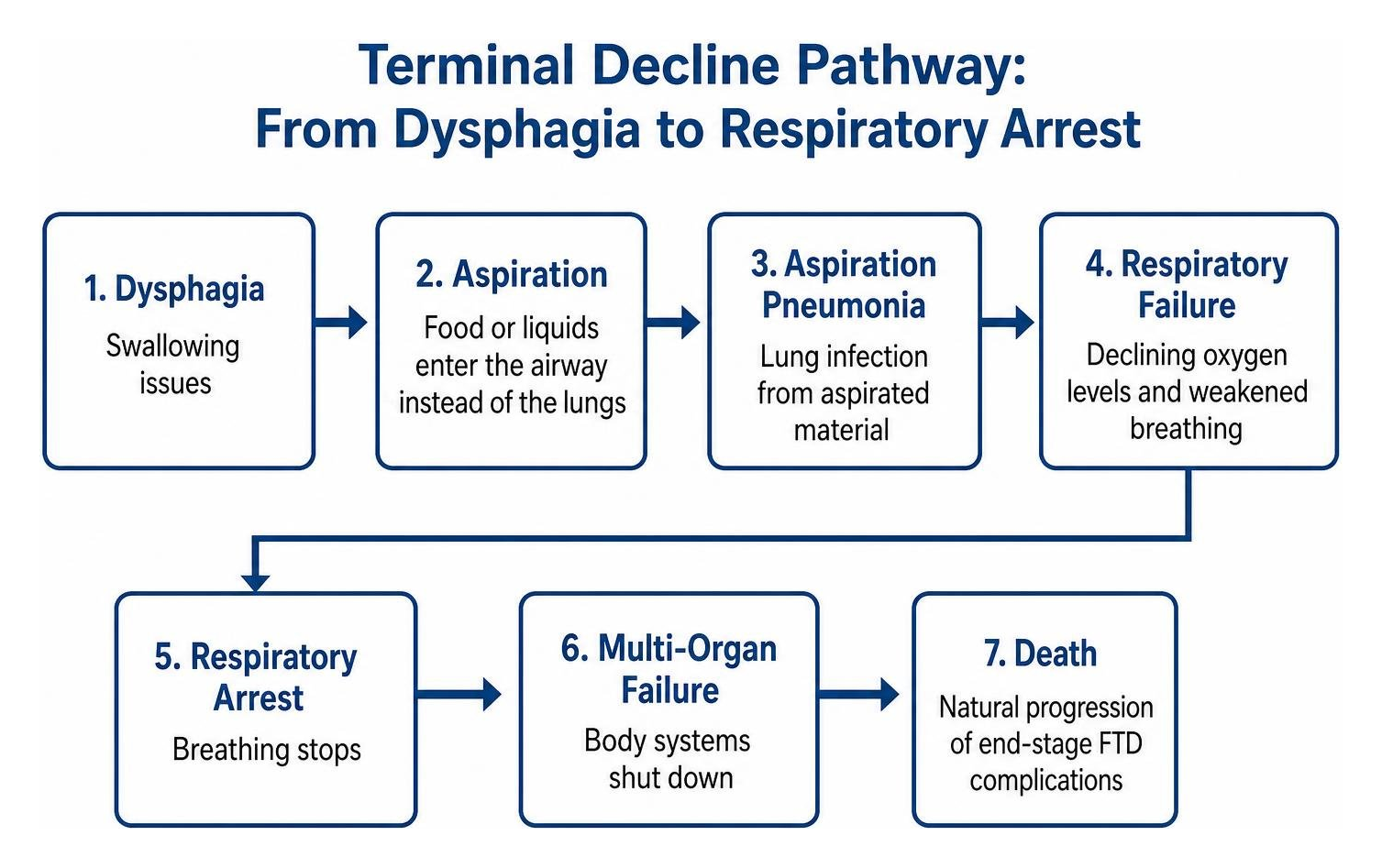
As FTD reaches its terminal phase, physiological decline accelerates. Families and care teams must recognize these shifts to transition care goals smoothly toward pure comfort and dignity.
Aspiration Pneumonia and Secondary Infections
The primary cause of death in frontotemporal dementia is not the brain atrophy itself, but secondary complications arising from loss of physical function:
- Aspiration Pneumonia: Accounting for approximately 40% of all deaths in end-stage bvFTD (van et al., 2020), this occurs when food particles, oral secretions, or stomach acid enter the lungs, triggering severe infection.
- Sepsis from Secondary Infections: Urinary tract infections (UTIs) or infected pressure injuries can progress rapidly into systemic sepsis.
- Gastrointestinal Complications: Paralytic ileus, bowel obstructions, or acute gastrointestinal bleeding can occur due to advanced autonomic breakdown.
Clinical Signs That Death Is Nearing
During the final days and hours of life (the active dying phase), caregivers will notice distinct physical indicators:
- Cheyne-Stokes Breathing: Irregular respiratory patterns characterized by deep, rapid breaths followed by prolonged periods of apnea (no breathing).
- Terminal Secretions: A congested rattling sound caused by the pooling of saliva in the back of the throat, often referred to as the “death rattle.”
- Mottling and Temperature Changes: Hands, feet, and knees become cool to the touch and develop a purplish, blotchy discoloration as peripheral circulation shuts down.
- Profound Somnolence: The individual enters an unarousable, comatose state and can no longer be awakened.
- Decreased Urine Output: Urine becomes concentrated, dark amber, and minimal as kidney function declines.
Palliative Care, Comfort Management, and Family Support
Managing advanced FTD requires a dedicated care model focused on proactive comfort. Utilizing personalized care approaches in memory care communities helps ensure that physical distress is minimized while honoring the individual’s dignity.
Pain Management and Comfort-Focused Interventions
Because individuals with late-stage FTD cannot verbally report pain, care teams must rely on behavioral observation scales (assessing facial grimacing, body tension, vocal groaning, or sudden agitation during repositioning).
Essential comfort interventions include:
- Meticulous Oral Hygiene: Swabbing the mouth with moist sponges and applying lip balm prevents painful dry mouth and mucositis.
- Alternative Medication Routes: When swallowing is no longer possible, medications for pain (such as morphine) or secretions (such as glycopyrrolate or scopolamine) are administered sublingually, transdermally via patches, or through concentrated oral solutions.
- Gentle Repositioning: Using soft pillows and specialty cushions to relieve pressure points without causing distress.
Hospice Transitions and Caregiver Grief Support
Transitioning to hospice care is not a surrender; it is a clinical choice to prioritize quality of life, comfort, and comprehensive family support. Hospice provides specialized nurses, social workers, chaplains, and home health aides to assist both the patient and their loved ones.
Caregivers of individuals with FTD often face intense anticipatory grief. Because FTD often strikes younger individuals during their peak career and parenting years, the emotional toll can be overwhelming. Seeking support groups through organizations like the Association for Frontotemporal Degeneration (AFTD) and utilizing professional respite services are crucial steps in preventing caregiver burnout.
Frequently Asked Questions About End-Stage FTD
How long does the final stage of FTD typically last?
The final stage of FTD, characterized by total dependency, immobility, and loss of communication, typically lasts between 1 and 2 years. However, the active dying phase—when organ systems begin shutting down—usually spans several days to a few weeks.
What is the primary cause of death in late-stage FTD?
Aspiration pneumonia is the leading cause of death, responsible for approximately 40% of mortalities in late-stage FTD (van et al., 2020). Other common causes include systemic infections (sepsis from UTIs or pressure sores) and gastrointestinal failure.
How can caregivers tell if a nonverbal FTD patient is in pain?
Caregivers can identify pain by monitoring nonverbal cues such as furrowed brows, clenched teeth, guarding of specific body parts, rapid breathing, rigid posture, or crying out when moved. Autonomic signs like sudden sweating or unexplained spikes in heart rate can also indicate physical distress.
Conclusion
Caring for someone facing the advanced stages of frontotemporal dementia is an emotionally profound and physically demanding journey. Understanding the clinical realities of motor decline, mutism, dysphagia, and autonomic changes empowers families to make informed, compassionate decisions focused on comfort and peace.
At Murray Highland Memory Care in Beaverton, Oregon, we provide a warm, boutique residential setting tailored specifically to individuals navigating complex dementias. Our family-focused, 24/7 care model and chef-prepared meals ensure that your loved one receives dignified, personalized attention through every phase of their journey. To better understand how dementia progresses across its full lifespan, explore our comprehensive guide to the stages of Alzheimer’s and related dementias.
References
van Engelen ME, Gossink FT, de Vijlder LS, Meursing JRA, Scheltens P, Dols A, Pijnenburg YAL. “End Stage Clinical Features and Cause of Death of Behavioral Variant Frontotemporal Dementia and Young-Onset Alzheimer’s Disease..” Journal of Alzheimer’s disease : JAD, 2020. PMCID PMC7683069.